
Last updated November 25, 2026
 Sweep & inspection
 Caps & crowns
 Flue relining
 Masonry repair
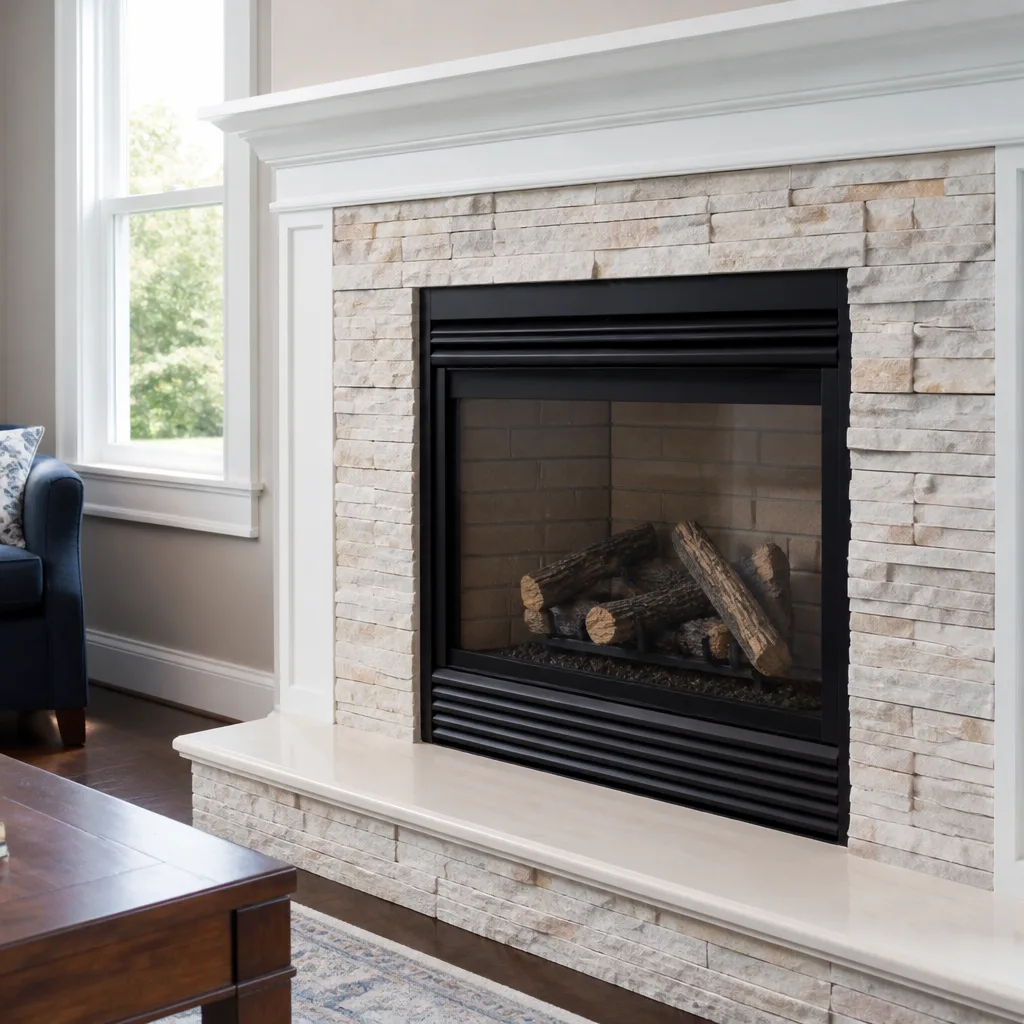 Gas fireplace service
Level 1 sweep and inspection to the NFPA 211 annual standard - flue, crown, cap, and flashing checked and photographed
Chimney sweep logs do not sweep chimneys. They loosen some creosote - which then falls where a brush and vacuum still have to collect it.
DIY vs Professional Chimney Cleaning: The Kent Homeowner’s Decision Guide
Most homeowners can push a brush up a flue. That’s the part of this debate nobody argues about. The part worth arguing about is everything the brush doesn’t touch: the third-degree creosote baked onto the liner walls, the hairline cracks in the flue tile, and the smoke chamber that’s supposed to guide combustion gases up and out but may be sending them somewhere else instead. In Kent, where a wet marine climate keeps wood damp and fires burn cooler than they should, those three failures are exactly the ones that cause chimney fires and cracked masonry. This guide breaks down what a DIY sweep actually does, what a professional sweep and inspection cover, what the tools cost on both sides, and when picking up a brush yourself is perfectly reasonable.
Quick Answer
A DIY chimney sweep removes loose soot and light creosote from an accessible flue, and for a homeowner with a straightforward masonry chimney and a light burning habit, it can be a legitimate maintenance step between professional visits. A professional sweep is different in kind, not just in degree: it combines rotary cleaning, high-powered vacuum containment, and a camera inspection that finds the glazed creosote, liner cracks, and smoke chamber defects a brush can’t reach or reveal. In Kent’s damp, cool-burning conditions, those hidden problems are the ones that matter most.
Styles & brands we work with
- Sweep & inspection
- Caps & crowns
- Flue relining
- Masonry repair
- Gas fireplace service
Table of Contents
- What a DIY Sweep Actually Accomplishes
- What a Brush Misses: Creosote, Cracks, and the Smoke Chamber
- The Tools Professionals Use That You Can’t Buy at Retail
- The Liability Angle: Documentation and Your Insurance Claim
- Where DIY Is Legitimate: Touch-Up Between Professional Visits
- The Real Cost Comparison: DIY vs Professional in Kent
- How a Professional Sweep and Inspection Actually Works
- Why Kent’s Climate Changes the Calculation
What a DIY Sweep Actually Accomplishes
A DIY sweep, done with a standard poly brush and rods, removes soot from the flue walls and knocks down the soft, flaky creosote that builds up after a season of burning. That’s real work, and it produces a real result: less soot means less fuel for a chimney fire, and a cleaner flue draws better. For a homeowner running a masonry fireplace a few times a week with well-seasoned wood, a manual brush pass between professional appointments isn’t a wasted afternoon.
Here’s the honest limit. A brush cleans what it can physically reach and what it can physically dislodge. It follows the flue’s shape as well as its stiffness allows, which means offsets, smoke shelves, and the smoke chamber above the damper tend to get partial coverage at best. And it can’t tell you anything about the condition of what it just scraped.
What a basic DIY pass does well:
- Removes loose soot from straight, accessible sections of flue
- Knocks down light, flaky first-stage creosote
- Clears obvious blockages near the damper or flue top
- Keeps the firebox and damper area tidier between burns
What it does not do:
- Remove glazed, tar-like third-degree creosote, which bonds to the liner and won’t budge under a poly brush
- Reveal cracks in flue tiles, joint gaps, or a deteriorating liner
- Inspect the smoke chamber, which is where many drafting and fire-risk problems live
- Contain dust the way a professional vacuum system does
- Produce any record of what was found and when
So the DIY question is narrower than it first appears. It isn’t “can I clean my chimney?” It’s “can I clean my chimney well enough that the parts I’m not cleaning don’t become the problem?” A brush is a starting point, not a full cleaning, and that distinction matters more in Kent than in a dry, hot-burning climate.
What a Brush Misses: Creosote, Cracks, and the Smoke Chamber
Creosote is the residue of incomplete combustion, and it comes in stages. First-stage creosote is the light, flaky, soot-like coating a brush handles easily. Second-stage is a crustier, more brittle layer that a stiff brush can partially break up. Third-stage creosote is the problem child: it’s glazed, hardened, and tar-like, and it bonds to the flue wall in a way a brush simply cannot scrape off. It’s also the most combustible stage, which is why a chimney fire is most likely to start where glazed creosote has built up.
The catch is that third-stage creosote forms more readily when fires burn cool and smoky, and cool smoking fires are exactly what damp wood produces. In Kent, where wood sits under wet winter air and a wet piece of wood burns inefficiently no matter how carefully you stack it, glazed creosote can build faster than the homeowner expects. A brush pass that removes the soft soot can leave the dangerous stage untouched, and from the living room the chimney looks clean.
Then there’s the liner itself. Masonry flues are lined with clay tiles, and those tiles crack over time from heat cycling, settlement, and moisture. A homeowner can’t see a cracked tile from the firebox, and a brush can’t feel it. What a cracked or gapped liner does is let combustion gases reach the surrounding masonry, which is a fire and carbon monoxide pathway. The only reliable way to find it is with a camera.
And above the damper sits the smoke chamber, the sloped space that funnels smoke from the firebox into the flue. When its surfaces are rough or coated, smoke doesn’t flow cleanly, and the chimney underperforms. A brush never enters that space. A sweep-and-inspection does.
So the brush does its job. It’s just a small part of the job, and the three things it misses – glazed creosote, liner cracks, and the smoke chamber – are the three that cause fires and structural failure. To compare, a certified sweep sees these deficiencies on inspection and can address them before they become a repair. That’s the difference a professional service delivers on a routine visit.
The Tools Professionals Use That You Can’t Buy at Retail
The tool gap between a homeowner’s kit and a professional setup isn’t marketing. It’s the difference between cleaning what a brush can reach and cleaning the whole system under control, then documenting what was found. Three tools in particular cross the line.
Rotary cleaning systems
Where a hand brush follows the flue and cleans by friction, a rotary system spins a cleaning head at speed to scrub the flue wall evenly and, crucially, to break up crustier creosote a static brush slides past. It’s what lets a professional get at second-stage buildup and the rougher surface areas where glazed creosote starts. It’s also the difference between a flue that looks clean and a flue that is clean to the masonry. These systems need rods, a power head, and practice to use without damaging the liner.
High-CFM vacuum systems
A shop vac and a drop cloth will stop some of the dust a DIY sweep kicks up, but it won’t contain it. Professional-grade vacuums pull high airflow and are staged to capture soot at the source as the flue is cleaned, so the living room stays habitable while the work is happening. The dust a DIY sweep releases is fine, black, and it settles into fabric and carpeting. It’s not a health catastrophe, but it’s a reason the job often “gets done” once and never repeated.
Camera inspection equipment
This is the tool that changes the decision. A camera on a rod lets a technician see the full length of the flue, the liner joints, the smoke chamber, and the flue top, and record what’s there. That’s how you find a cracked tile, a slipped joint, or glazed creosote before it causes a fire, and it’s also how you get a picture of the chimney’s real condition instead of a guess. A homeowner with a brush has no equivalent, and this is the piece of the professional visit that most directly protects the house. It’s also why, when a sweep recommends work, the recommendation should come with evidence the homeowner can look at. We tell you what we found before we tell you what it costs, and the camera is how that’s possible.
The Liability Angle: Documentation and Your Insurance Claim
A documented professional sweep can affect what happens after a chimney fire, in a way a DIY clean cannot. Here’s how the logic runs, without overstating it: when a chimney fire damage claim lands with a homeowner’s insurer, the question that tends to come up is whether the chimney was maintained and inspected as it should have been. A receipt and report from a professional sweep and inspection is a record of that maintenance. A DIY clean leaves no record at all, beyond the homeowner’s word.
That matters in two directions.
- After a loss: a documented inspection history shows the chimney was maintained and any identified issues were addressed, which supports the claim and, in some cases, avoids disputes about neglect.
- Before a loss: a professional inspection catches the conditions – glazed creosote, a cracked liner, a failing crown – that a claim might later be attributed to. Fixing them removes the argument entirely.
We won’t tell you an insurer will deny a claim because you swept your own chimney; that depends on the policy and the circumstances, and we don’t have your policy in front of us. What we will say is that the paperwork trail is real, and it favors the homeowner who has one. When a chimney fire happens, “the chimney was swept and inspected, here’s the report” is a stronger position than “I brush it out myself every fall.”
Documentation also serves the homeowner in a subtler way. The camera report from a professional sweep is the difference between “the sweep said I need a new liner” and “here are photos of the cracked tiles, here’s why they matter, and here’s what the options cost.” If you’ve been burned before by a contractor who underbid and then upsold on the spot, the documented inspection is the tool that keeps that from happening. It’s why we make a camera inspection and photo report part of the sweep rather than an add-on. The full picture – what was found, what it means, what can wait – belongs to the homeowner before any work is authorized.
Where DIY Is Legitimate: Touch-Up Between Professional Visits
Not every brush belongs in a closet. There are real, sensible situations where a homeowner should be doing some chimney work themselves, and pretending otherwise would be dishonest. Here’s where DIY earns its place.
- Between annual professional sweeps. If you’ve had a professional sweep and inspection and your burning season has been light, a manual brush pass mid-season to knock down fresh soot is reasonable upkeep. It doesn’t replace the professional visit, but it keeps the buildup from getting ahead of you.
- Keeping the firebox and damper area clean. Ash, debris, and soot around the firebox and damper are yours to manage. Regular cleaning there is easy, safe, and helps the fire draw.
- Maintaining the cap and crown exterior. Checking that the chimney cap is in place, clear of debris, and not blocked by a bird’s nest is something a homeowner can do from the ground or a safe ladder position. Keeping leaves and debris off the crown helps it shed water. The installation of a proper cap is a professional job, but the visual check isn’t.
- Burning better wood. This is the single highest-leverage DIY step there is. Seasoned, dry wood burns hotter and cleaner and produces less creosote to begin with. Keeping wood covered and stacked to dry between seasons does more for your chimney than any brush pass, and it costs nothing but discipline.
Note what’s not on this list: DIY removal of glazed creosote, DIY liner work, DIY crown repairs, and DIY inspections. Those require the tools and the trained eye to do safely, and they’re where a homeowner’s effort can turn a small problem into a large one. The poly brush makes it easy to scratch a liner or miss a cracked tile, and when the brush scuffs the flue wall, that can create a rougher surface that actually catches future creosote. Leave the structural steps to a trained professional.
A sweep-and-inspection visit establishes the baseline, and the homeowner’s own work in between keeps the baseline from drifting. That’s the division of labor that makes sense, and it’s the way most of the Kent homeowners we work with manage their fireplaces.
The Real Cost Comparison: DIY vs Professional in Kent
Let’s do the math honestly, because the sales pitch on both sides leaves it out. On the DIY side, a basic brush-and-rod kit for a standard chimney is a one-time purchase plus the cost of the occasional replacement brush head. On the professional side, a routine sweep and inspection is a per-visit cost. The kit is cheaper upfront. But that’s only half the equation, because the two aren’t doing the same amount of work.
Here’s a fair way to frame the comparison as line items:
- DIY initial kit cost: a brush-and-rod set, plus a drop cloth and basic eye and dust protection.
- DIY time: the sweep itself, plus setup, cleanup, and the dust that gets into the room regardless of how careful you are.
- DIY risk: the possibility of missing glazed creosote, scuffing a liner, or overlooking a cracked tile, none of which you can see from inside the firebox.
- Professional sweep and inspection cost: a per-visit price confirmed in a written estimate before the work starts.
- Professional added value: the rotary cleaning, camera inspection, photo report, and documented maintenance record that catch the problems a brush leaves behind.
The honest sum is that a DIY kit looks cheaper because it’s compared to a full professional visit, not to the same amount of work. The professional visit covers tools the homeowner doesn’t own, a part of the flue the homeowner can’t see, and a record the homeowner can’t produce. What the comparison really tells you is whether the extra cost of a professional sweep is buying enough to be worth it. In most cases it is – a single missed glazed-creosote buildup or a single undetected liner crack can cost far more to fix than a year of routine visits.
The cost side of this is also why documentation matters. A professional sweep you can afford once a year, with a camera report that makes the “you need expensive work” conversation a visual one, is money well spent. And the estimate for any recommended work should always be free and in writing, with a clear scope, so the homeowner isn’t deciding on a number under pressure. Every job is priced by a written estimate, and the price is agreed before booking.
How a Professional Sweep and Inspection Actually Works
A professional visit is two jobs in one: cleaning and looking. It’s the combination that sets it apart from a brush pass. Here’s what a typical visit looks like, in order.
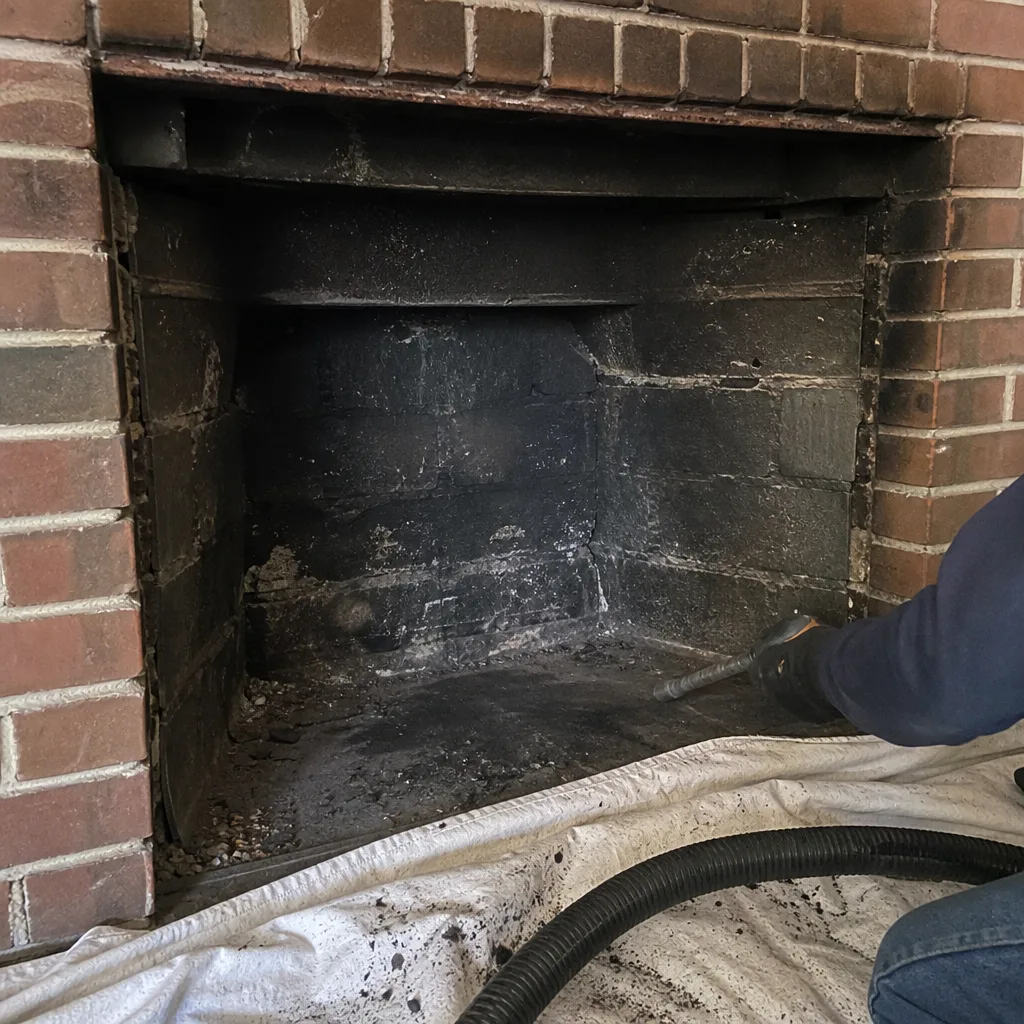
- Setup and containment. Drop cloths go down, and a high-CFM vacuum is staged at the firebox to capture soot and dust as the flue is cleaned.
- Access and preliminary check. The damper area, firebox, and flue access are checked, and any obvious blockage at the flue top or damper is cleared first.
- Cleaning. The flue is brushed, and where the buildup calls for it, a rotary system is used to scrub the wall evenly and break up crustier creosote.
- Camera inspection. A video camera runs the length of the flue to check the liner tiles, joints, smoke chamber, and flue top. Any deficiencies are recorded.
- Photo report and walk-through. The findings are documented with photos, and the technician walks the homeowner through what was found, what it means, and what, if anything, needs doing now versus later.
That last step is what separates a diagnostic sweep from a one-trick cleaning. A sweep that hands you a bill and a vague “you’re all set” isn’t giving you the information you need. You should end the visit knowing the condition of your flue, your liner, and your smoke chamber, with a record you can keep. Nothing gets recommended without camera evidence you can see for yourself, and when a repair can safely wait, we say so.
Where a deficiency turns up, the fix is often less dramatic than homeowners fear. A cracked smoke chamber or a rough flue wall can sometimes be addressed with HeatShield liner resurfacing, which restores the flue from the inside rather than requiring a full tear-out. DuraFlex flexible liner systems are suited to older, irregular flues that rigid liners can’t serve. A missing or failing cap is the most common water entry point on a chimney, and a proper cap installed to spec closes it. The point is that a documented sweep opens up a full set of options, from “nothing needed” to “let’s schedule the repair,” and the homeowner decides with the evidence in hand.
Why Kent’s Climate Changes the Calculation
Kent isn’t a dry climate, and that matters for how a chimney ages and how creosote behaves. Wet, cool weather means wood is harder to keep truly dry, and damp wood burns cooler and smokier than seasoned wood. Cooler, smokier fires deposit more creosote, and they deposit it at a stage that hardens rather than stays flaky. That’s the single biggest reason the DIY calculation tilts toward professional care in Kent: the creosote a brush removes is the easy kind, and the creosote this climate tends to produce is the hard kind.
The damp also works on the chimney from the outside. Water that gets past a failing cap or crown soaks into masonry, and when that masonry freezes and thaws, it cracks. A cracked crown lets water into the masonry all winter, and by spring the crown and the flue top can both be in worse shape than they were in the fall. That’s why the cap and crown work is part of the same system conversation as the sweep. A swept chimney that’s still taking on water isn’t a solved chimney.
So the Kent homeowner is dealing with two climate-driven pressures at once: a firebox producing creosote that a brush can’t fully clear, and a chimney being worked on from the outside by wet weather. The annual sweep and inspection is the touchpoint where both get looked at. Routine maintenance also matters because it establishes the baseline: knowing the flue was clean and the liner was sound last fall is what lets a homeowner tell the difference between a small issue and an emergency.
Beyond the climate, a few practical notes for Kent homeowners. If you’re burning frequently through the wet months, plan the sweep for the shoulder season before the burning season, not in the middle of it. Get a written scope and price before any work is authorized. And if a contractor tells you the liner needs replacing, ask to see the camera footage. In Kent’s housing stock, which includes older homes with irregular flues, that’s exactly the kind of question worth asking. If you want to start with the basics, our guide to what a chimney sweep covers is the place to begin.
Common Mistakes to Avoid
- Sweeping and skipping the inspection. A brush cleans; it doesn’t diagnose. If you sweep and call it done, you’ve checked nothing. The inspection is where the value is, and it’s the part a brush can’t replicate.
- Assuming a brushed flue is a safe flue. Soft soot comes off easily, so a chimney looks clean from the firebox even when glazed creosote is still bonded to the liner. Looks can be dangerously wrong here, and only a camera settles the question.
- Burning damp wood and then blaming the chimney. In Kent’s climate, wood that sat out through a wet winter burns cool and smokes. That’s the single biggest driver of creosote. Keep wood covered and seasoned, and your chimney has far less to fight.
- Ignoring the cap and crown because they’re “not the chimney.” They are the chimney, at least as far as water is concerned. A missing cap or cracked crown is the most common water entry point, and water is what destroys masonry over a winter. A chimney repair visit that addresses the cap and crown protects the whole structure.
- Skipping the pre-season sweep and starting the fire anyway. The first fire of the season is exactly when an old blockage or a cold-weather crack reveals itself. Sweep and inspect before you burn, not after.
- Authorizing repairs from a camera you never saw. If you’ve been burned by on-site upsells before, ask to see the evidence. Any honest technician will show it, and any honest recommendation should rest on it.
- Letting a fireplace sit unused for years and then lighting it cold. A flue that sat dormant can collect debris, birds’ nests, and moisture damage without any sign from the living room. Get it inspected before the first burn after a long idle period.
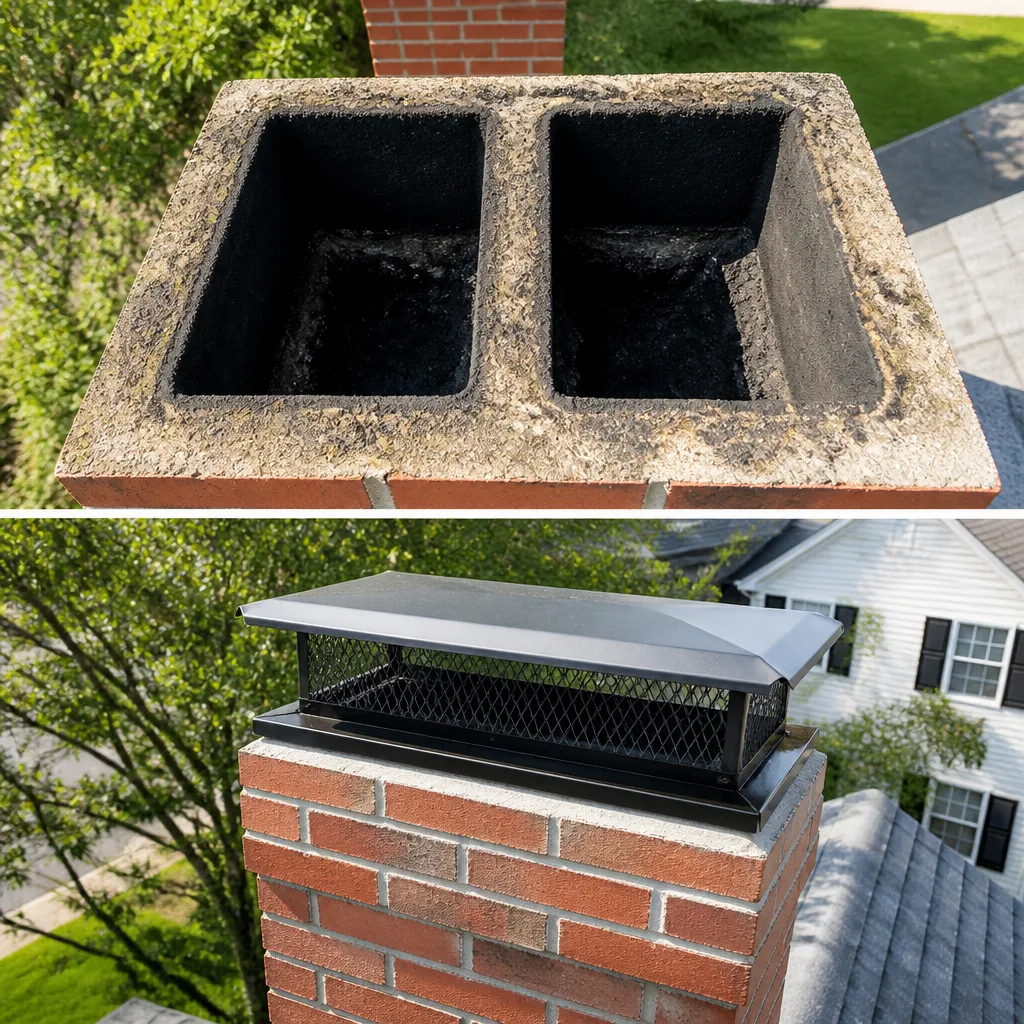
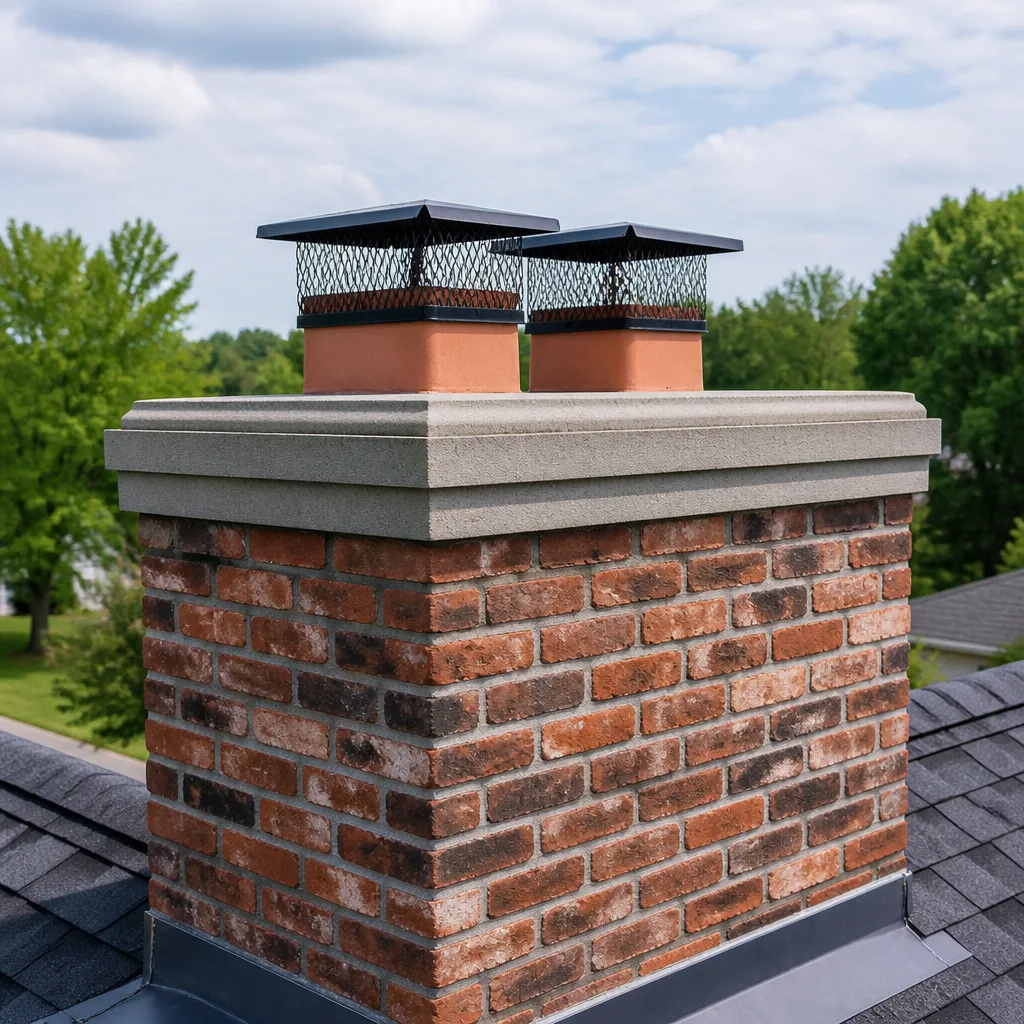
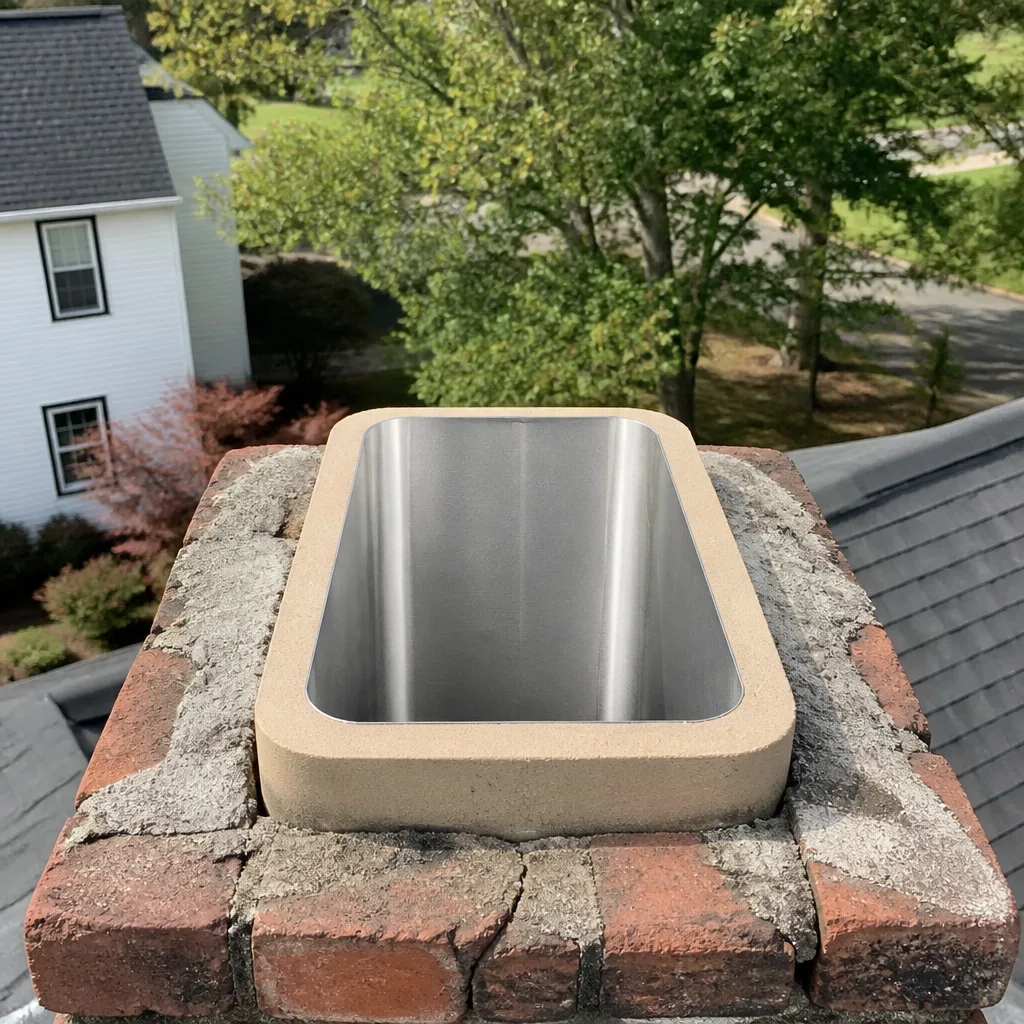
See the difference
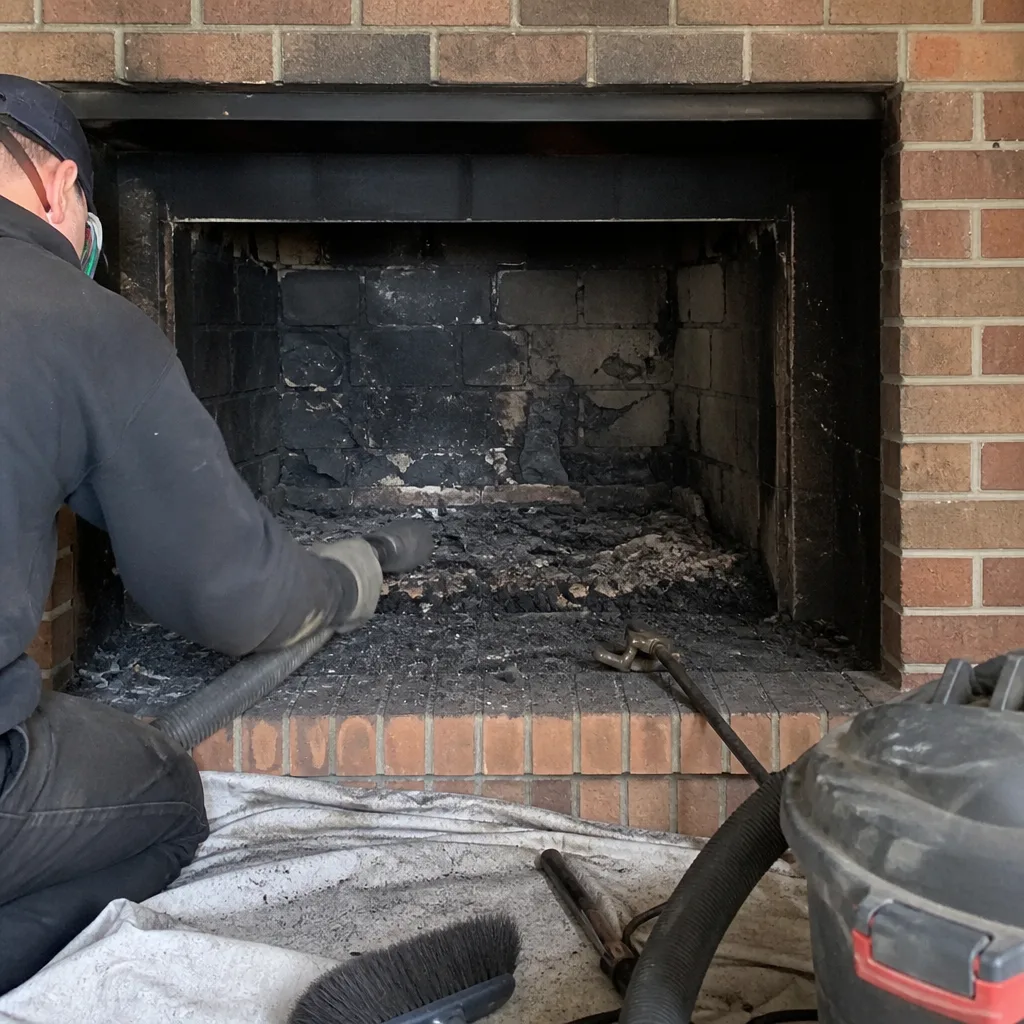 Before
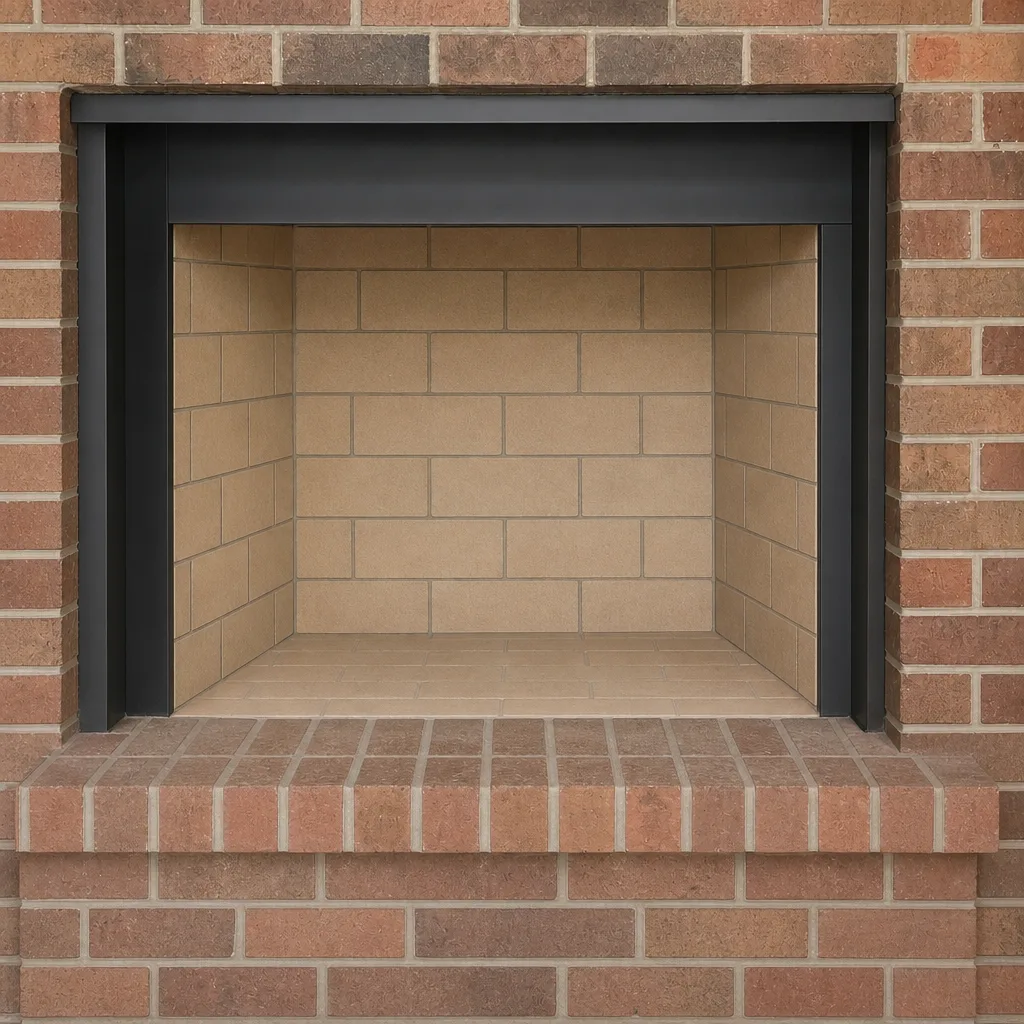 After
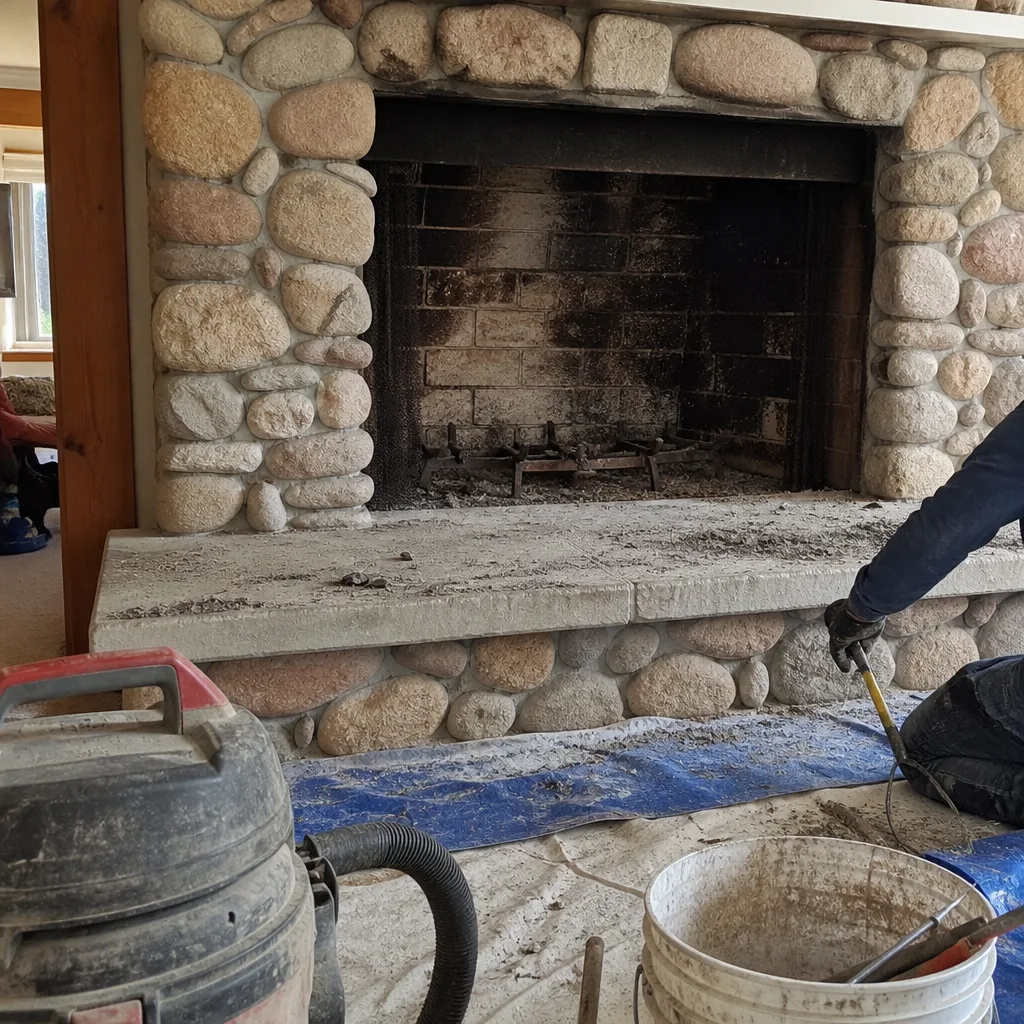 Before
 After
 Before
 After
When to Call a Professional
Call a professional when any of these come up: you’ve never had the chimney inspected; you burn firewood regularly through the wet season; you notice smoke backing into the room, a strong creosote smell, or a damper that sticks; the cap or crown looks damaged; or a long-idle fireplace is about to be used again. Those are the occasions where a camera inspection earns its cost. A professional sweep also matters when you’re buying or selling a house and need a record of the chimney’s condition. Where the work involves the liner, the smoke chamber, or the crown, a trained professional should do it, and the homeowner should see the evidence before authorizing repairs. Kent Chimney Sweep offers free estimates in Kent. Call (855) 658-3498. We answer 24/7. Fast dispatch from 7am to 7pm, Sunday through Friday.
Frequently Asked Questions
Yes, for surface soot and light creosote in an accessible straight flue, a standard brush-and-rod set will do real work. It replaces a mid-season touch-up, not a professional sweep, because it can’t remove glazed creosote, inspect the liner, or check the smoke chamber. For a homeowner on a budget, a DIY pass between annual professional visits is a reasonable habit. For the annual safety check, call a professional.
A professional sweep cleans with rotary systems and high-CFM vacuum containment, then inspects the full flue with a camera and documents the findings. The camera inspection is the part a homeowner can’t duplicate: it reveals cracked liner tiles, gapped joints, glazed creosote, and smoke chamber defects that no brush can show. The photo report is what lets a homeowner make an informed decision about repairs. If you want to see what a professional visit covers, a chimney repair page will show you the repair side of the system. The sweep is the starting point.
Plan on an annual sweep and inspection, and let the inspection determine whether more frequent visits are needed. In Kent’s wet climate, cool-smoking fires build creosote faster than in a dry climate, and a homeowner who burns frequently through the wet months may find the chimney builds up to the point where an annual visit is the minimum. The inspection is what tells you where you stand. There’s no harm in having it checked more often; there’s real harm in going a season without.
A documented professional sweep and inspection gives you a maintenance record that can support a homeowner’s claim after a chimney fire, by showing the chimney was maintained and any identified issues were addressed. Whether a specific claim is paid depends on the policy and the circumstances, which we can’t determine for you. What a sweep can do is produce the report that makes the maintenance history clear. That’s worth having.
A sweep cleans; an inspection looks and documents. A professional service does both in one visit, which is the point: cleaning without inspection leaves hidden problems in place, and inspection without cleaning leaves the soot to be dealt with next time. The combination is what catches the glazed creosote and liner cracks a brush pass misses. For a fireplace that’s used regularly, the combined visit is the one that matters.
DIY is a bad fit when the flue is irregular, when you suspect glazed creosote, when the liner condition is unknown, when the cap or crown is damaged, or when the fireplace has sat idle for years. In those cases, the cleanup is the easy part and the diagnosis is the real work. A professional sweep with a camera inspection is the right call, and it’s also when a repair recommendation is most likely to be justified – and most likely to come with evidence you can see.
The Bottom Line
The DIY debate settles cleanly once you separate cleaning from inspecting. A brush removes soot, and for light maintenance between professional visits, that’s a legitimate job for a homeowner. What a brush can’t do is remove glazed creosote, reveal a cracked liner, or check the smoke chamber, and those are the failures that cause fires and masonry damage. In Kent’s wet climate, they’re the most likely failures, which is why the annual sweep and inspection is worth the cost. A professional sweep combines rotary cleaning, camera inspection, and a documented report, and it lets a homeowner see the evidence before deciding on any repair. When you’re ready for the annual visit, call (855) 658-3498. We answer 24/7. Fast dispatch from 7am to 7pm, Sunday through Friday. Estimates are free, and a written estimate sets the final price.
Written by the team at Kent Chimney Sweep.