
Last updated November 25, 2026
 Sweep & inspection
 Caps & crowns
 Flue relining
 Masonry repair
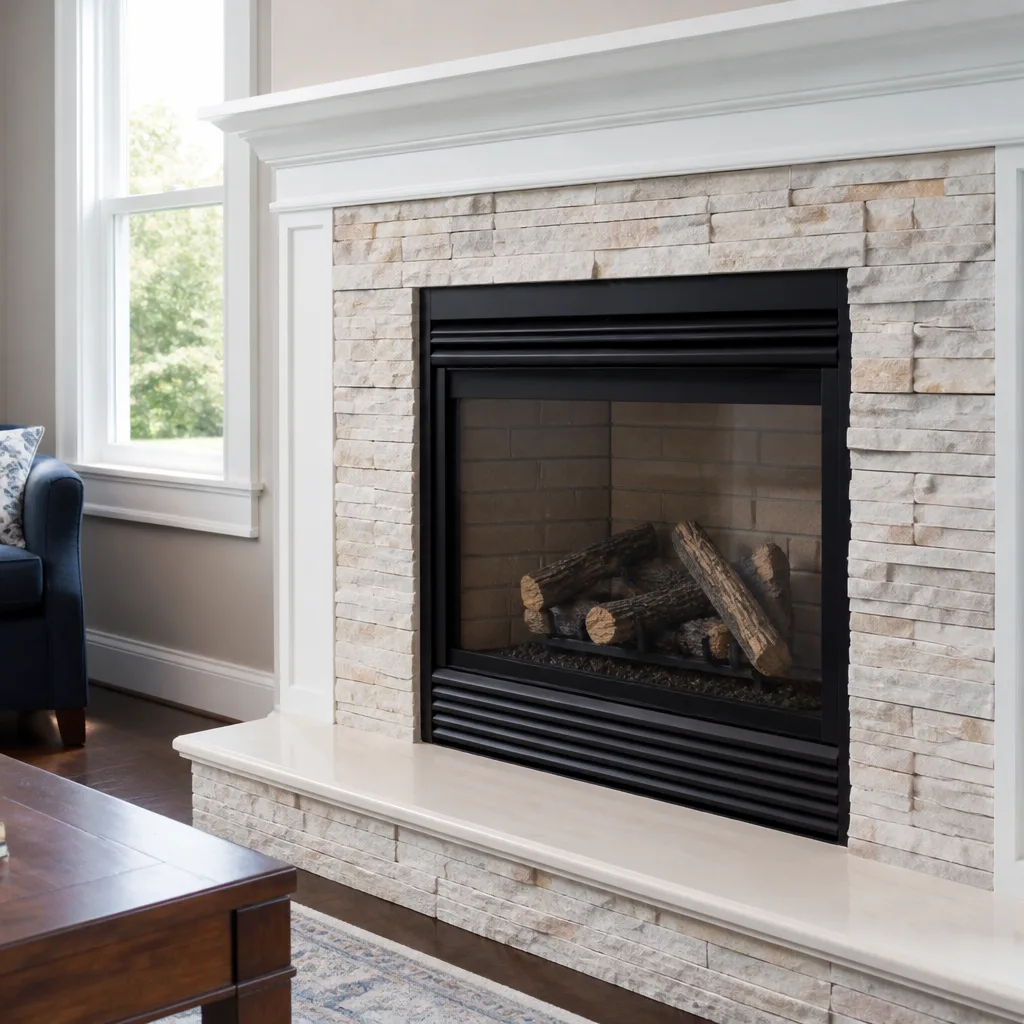 Gas fireplace service
Level 1 sweep and inspection to the NFPA 211 annual standard - flue, crown, cap, and flashing checked and photographed
Chimney sweep logs do not sweep chimneys. They loosen some creosote - which then falls where a brush and vacuum still have to collect it.
Chimney Sweep Maintenance Schedule: What to Do and When
The worst time to discover your flue liner has a crack is the first cold snap of the year. That’s precisely when most people find out, because “annual sweep” was the only item on their maintenance list. A chimney is a system with moving parts, sealed joints and masonry that all respond to the seasons, and it needs care spread across the calendar rather than one appointment in October. In this guide we’ll lay out a month-by-month maintenance schedule for Kent homeowners, explain what changes with fuel type and how often you burn, and show you what to check between professional visits so you’re never caught off guard.
Quick Answer
Schedule a professional sweep and inspection once a year, timed for late summer or early fall just before your first fire, and add a spring inspection after the heating season ends. Wood-burning chimneys need annual creosote assessment; gas inserts need a different check of the burner and vent on their own cadence. Between visits, watch the cap, the mortar and the crown for signs of water or animal entry. That’s the short version. The rest of this guide walks through the calendar month by month so nothing gets missed.
Styles & brands we work with
- Sweep & inspection
- Caps & crowns
- Flue relining
- Masonry repair
- Gas fireplace service
Table of Contents
- Why “Annual Sweep” Is the Floor, Not the Ceiling
- Your Month-by-Month Chimney Maintenance Calendar
- Why Spring Is the Best Time for a Level 2 Inspection in Kent
- Summer: The Liner Check You Don’t Want to Skip
- Early Fall: The Sweep Before the First Fire
- Mid-Winter: The Damper and Creosote Audit
- How Fuel Type Changes Your Schedule
- What to Check Between Professional Visits
- Common Mistakes to Avoid
- When to Call a Professional
Why “Annual Sweep” Is the Floor, Not the Ceiling
An annual sweep keeps a wood-burning chimney from becoming a fire hazard. It does not, on its own, protect the crown from a freeze-thaw winter, catch a hairline crack behind the flue tile, or tell you a raccoon has moved into the cap. Those are separate checkpoints that live at different points on the calendar. Treat the sweep as one task among several and the system stays ahead of trouble instead of chasing it in a cold snap.
Kent’s wet winters make this more important than in drier climates. Water is the most patient enemy a chimney has. It works into mortar joints, freezes overnight, expands, thaws, and repeats. By the time a homeowner sees a stain on the ceiling, moisture has usually been doing quiet damage for a full season. A spring inspection catches that cycle before it compounds into a rebuild.
Here’s the mental model we ask homeowners to hold: the chimney has a draft path, a weather barrier and a structural shell. The sweep cleans the draft path. The inspection reads all three. The cap and crown work protects the weather barrier and the shell. You need all of them on a schedule, not just the one that comes to mind first.
- Draft path: flue, damper, smoke chamber, firebox. Cleaned and checked annually.
- Weather barrier: cap, crown, flashing. Checked at least twice a year, and after any wind event.
- Structural shell: masonry, mortar joints, liner. Inspected in spring, before the wet season’s damage compounds.
A swept chimney is a starting point, not a finish line. The calendar is what makes the difference. At Kent Chimney Sweep we work on the whole system, not just the flue, and the schedule below reflects that full-system view.
Your Month-by-Month Chimney Maintenance Calendar
Here’s the full calendar we recommend to homeowners across Kent. Some items are things a trained technician handles; others are simple visual checks you can do yourself from the ground or the hearth. Print it out or save it to your phone.
- April: Book a Level 2 inspection after the heating season ends. This is the wet season’s exit ramp, and it’s the best window to catch winter damage.
- May: Have the crown and cap examined. Repair cracks in the crown now so summer rain doesn’t find them. Clear brush and tree limbs away from the cap.
- June: Confirm the cap screen is intact. Look for bird nests, squirrel damage or wasp cones under the cap. Schedule any liner work you already know you need.
- July: Address liner issues identified in spring, whether that’s resurfacing with HeatShield or a DuraFlex liner install for an irregular flue.
- August: Book your pre-season sweep. Slots fill early, and you want the appointment done before the first cool evening.
- September: Complete the sweep and Level 1 inspection. Confirm the damper operates smoothly. Order or install firewood so it has time to season.
- October: First fire of the season. Do a short test burn and watch for smoke rollback or weak draft.
- November through February: Mid-winter damper audit. Check creosote buildup if you burn heavily. Watch the cap for ice dams and snow load.
- March: End-of-season visual check. Note anything unusual for the spring inspection.
That’s nine checkpoints across the year, with the heaviest lifting in spring and early fall. Most homeowners don’t need to think about the chimney in between because nothing new is happening. If you only remember two dates, remember April for the inspection and August for the sweep booking.
Why Spring Is the Best Time for a Level 2 Inspection in Kent
A Level 2 inspection is the deep read of the chimney. It includes a camera scan of the flue interior and a close look at the joints, liner condition, smoke chamber and connections. The question isn’t whether you need one, but when. In Kent, spring is the answer, and the reason is moisture.
By the time April arrives, your chimney has just come through a wet Pacific Northwest winter. Wind-driven rain has been hitting the cap and crown for months. Freeze-thaw cycles have been working on mortar joints. Any hairline crack in the flue tile is now a wet crack, and wet cracks grow. A spring inspection catches that damage at the point where it’s simplest to repair. Wait until fall and the same crack has had another summer of thermal cycling and a wet shoulder season layered on top.
There’s a scheduling benefit too. Spring is quieter for chimney work. If the inspection turns up a repair – a crown rebuild, a liner resurfacing job, a flashing reset – there’s room in the calendar to get it done before the fall crunch. In October a homeowner with a failed liner is often told to wait weeks. In May the same job gets handled with breathing room.
What a Level 2 inspection covers:
- Video scan of the flue interior to spot cracks, gaps and heavy creosote.
- Close examination of the chimney exterior, crown and flashing.
- Smoke chamber and damper assessment.
- Connections at the firebox and appliance.
- A written report with photos you can see for yourself.
We tell you what we found before we tell you what it costs. If the inspection shows the flue is in good shape, we say so and you’re done for the year. If it shows damage, you get pictures, an explanation, and an honest read on what can wait safely.
Summer: The Liner Check You Don’t Want to Skip
Summer is the season of quiet work on a chimney. Nothing’s burning, the weather’s dry, and any liner repair has time to cure before it matters. This is also when most liner problems that would have been an emergency in December get fixed calmly.
The flue liner is the innermost layer of the system, the surface that stands between combustion gases and the surrounding masonry. Clay tile liners crack with thermal cycling. Older homes sometimes have no liner at all, or a pitted original that’s begun to break down. Stainless flexible liners – DuraFlex is one we install – handle irregular, offset or older flues that a rigid liner can’t serve. For liners that are structurally sound but showing surface wear, HeatShield resurfacing can restore the flue from inside without a full relining job. That’s often the difference between a modest repair and a rebuild.
When we look at a liner in summer, we’re asking three questions:
- Is the flue fully lined and continuous from top to bottom?
- Are there cracks, gaps or separation in the existing liner?
- Does the flue size match the appliance it serves?
A liner that fails question one or two needs to be repaired or replaced before the heating season. A liner that fails question three may be pulling poorly, which shows up as smoke rollback or weak draft when you light up in the fall. Catching it in July means the season starts clean.
If you haven’t had a Level 2 inspection in the last year, summer is also fine timing. It’s just not the ideal one, since the wet season’s damage is less fresh and some issues that show up clearly in spring haven’t fully declared themselves yet. Spring remains our first choice; summer is a close second. Read more about chimney repair when a liner or masonry issue is already confirmed.
Early Fall: The Sweep Before the First Fire
The sweep is the appointment most homeowners already know about. It removes creosote, soot and any debris from the flue so the first fire of the season draws cleanly and safely. Book it for late August or September, before the rush.
Creosote is the residue left behind by wood smoke. It builds up in stages: a light soot first, then a flaky crust, then a glazed, tar-like layer that’s the hardest to remove and the most flammable. A sweep removes what’s on the flue walls. The inspection that comes with it tells you whether what’s left is a safe layer or a problem. Stage-three glazed creosote usually needs more than a brush, and we’ll say so plainly if that’s the case rather than sweeping over it.
A fall sweep should also check the damper, the smoke shelf and the firebox. A damper that sticks or won’t seat fully lets heat escape up the flue when the fireplace isn’t in use, and leaks smoke into the room when it is. Better to find that in September than on the first cold night.
What a proper fall sweep involves:
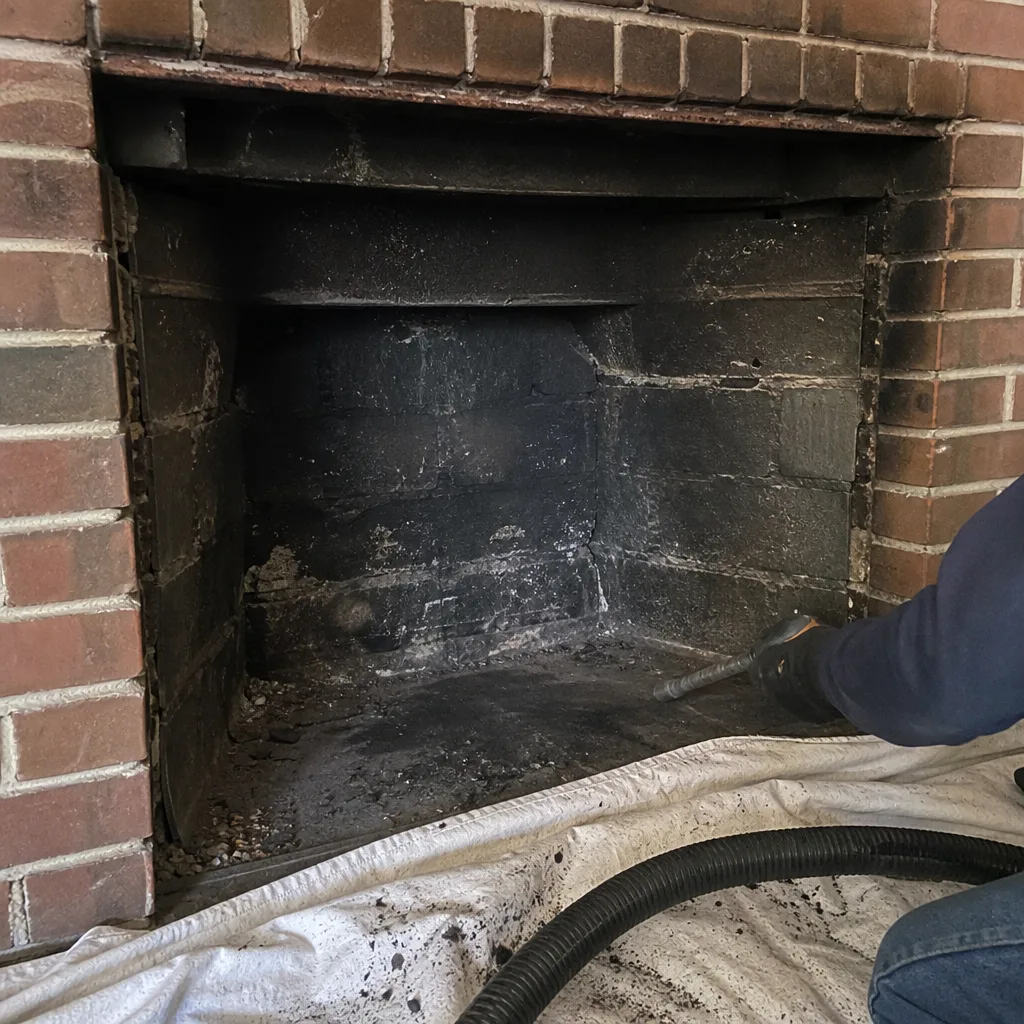
- Drop cloths and containment so no soot gets into the room.
- Brushing the flue from the top or bottom as access allows, with the right brush for the flue type.
- Vacuuming with a HEPA setup as we go.
- Visual inspection of the flue, damper, smoke chamber and firebox.
- A clear read on whether anything we saw needs a follow-up visit.
Schedule your chimney sweep early. September appointments go fast, and the last thing you want is to be calling in mid-October along with everyone else.
Mid-Winter: The Damper and Creosote Audit
Mid-winter isn’t a sweep season for most households. It’s a habit season. The mid-winter audit is a light check you or a technician does while the fireplace is in regular use, aimed at catching a problem before spring.
The damper comes first. Open it fully before every fire, leave it open until the fire is fully out, and close it when the fireplace is cold. A damper that isn’t seating fully is losing heat up the flue all winter. On very cold days, a stuck-open damper is the difference between a warm room and a drafty one. If the damper lever feels loose or won’t hold position, that’s worth a call.
Creosote comes second. If you burn wood heavily – say three or four fires a week through the winter – check inside the firebox and at the damper once a month. A quarter-inch of flaky creosote is normal between sweeps. A tar-like glaze or a swelling layer is a sign you’re burning too cool, or you need a mid-season sweep. Cool, smoldering fires deposit more creosote than hot ones, which is the counterintuitive part most homeowners never hear.
What to watch mid-winter:
- Damper moves smoothly and closes fully.
- No smoke rollback into the room when a fire is burning.
- No unusual smell when the fireplace is cold.
- Creosote visible inside the firebox is flaky, not glazed.
- The cap is clear of snow, ice and nests.
A fireplace repair call mid-winter is usually about the damper or the firebox. If the lever has stiffened or the firebox bricks have begun to crack, that’s a fireplace repair question and worth an early call rather than a spring one.
How Fuel Type Changes Your Schedule
A wood-burning fireplace and a gas insert live on different maintenance clocks. Wood systems need annual creosote assessment and a sweep based on burn volume. Gas systems need the burner, the vent and the connection checked on a similar annual cycle, but the task list is different and the risk profile isn’t the same.
Wood-burning, the routine:
- One annual sweep, timed for early fall.
- Spring inspection to catch moisture and liner issues.
- Mid-winter creosote check if you burn several nights a week.
- More frequent sweeping if you burn heavily or use unseasoned wood.
Gas inserts, the routine:
- Annual service of the burner, pilot and vent.
- Spring check of the vent termination for blockage or bird nests.
- Carbon monoxide detector test at the start of the season.
- Sweeping is not the task here; vent and burner checks are.
Pellet stoves and wood inserts sit somewhere in between. Pellet appliances need an annual deep clean of the exhaust path, and the vent needs inspecting for ash buildup, which is heavier than wood ash. Wood inserts are swept like a fireplace but checked more carefully for connection integrity at the surround.
A general note that applies to any fuel: carbon monoxide is a real risk in any combustion system, and a working CO detector on every level of the home is a baseline, not an optional extra. We mention it because maintenance schedules miss it, and it’s the cheapest safety check most households ever install.
What to Check Between Professional Visits
Between scheduled visits, a homeowner can catch a lot from the ground and the hearth. These aren’t DIY repairs. They’re quick visual checks that tell you whether something needs attention sooner than the next appointment.
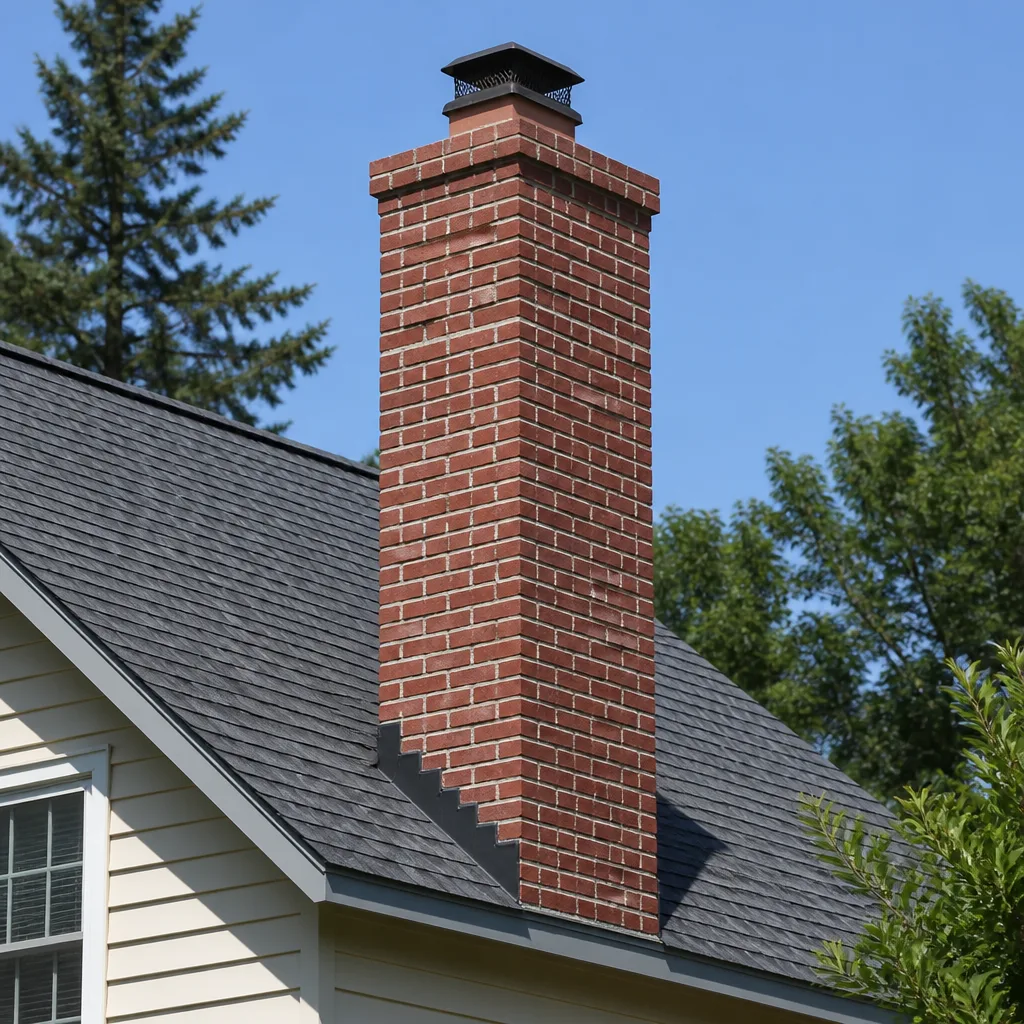
The cap. From the ground, look at the cap the way you’d look at the roof. The cap should sit flat and the screen should be intact. A cap tilted to one side, a missing screen, or a screen that sags under snow suggests the cap is coming loose. Our team installs Gelco and Famco caps to spec so this stays tight through the seasons. Generic hardware-store caps often don’t, which is why we don’t use them.
Animal entry. A missing or torn screen lets birds, squirrels and raccoons in. If you hear scratching in the chimney, or notice nesting material right at the cap, call it in. Animal nests are a fire hazard, and a clogged flue drafts poorly for weeks before anyone connects the two.
Mortar spalling. On the chimney exterior, look at the joints between the bricks. Flaking or crumbling mortar is a normal sign aging, and it’s the first stage of water getting behind the brick. A joint that’s missing mortar entirely is a bigger deal. Catch it in spring and the repoint is small. Miss it for a couple of winters and the bricks themselves start to go.
The crown. The crown is the concrete or mortar slab at the top of the chimney. It slopes away from the flue so rain runs off. A crack in the crown, or a crown that has pulled away from the flue, lets water into the masonry all winter. That’s often how a home ends up needing more masonry work than expected. Crown repair is part of our chimney repair work and worth doing early.
The firebox. A quick look at the firebox bricks and the damper each month during heating season tells you whether anything is off. Cracks are common in older fireboxes. A crack smaller than a hair is usually cosmetic, but a crack that’s opened up or a brick that’s loose is worth a call.
- Cap flat and secure, screen intact.
- No bird nests or leaves packed into the flue.
- Mortar joints intact, no flakes on the ground below.
- Crown sloped, uncracked, flush at the flue.
- Firebox bricks tight, no widening cracks.
- Damper operating smoothly.
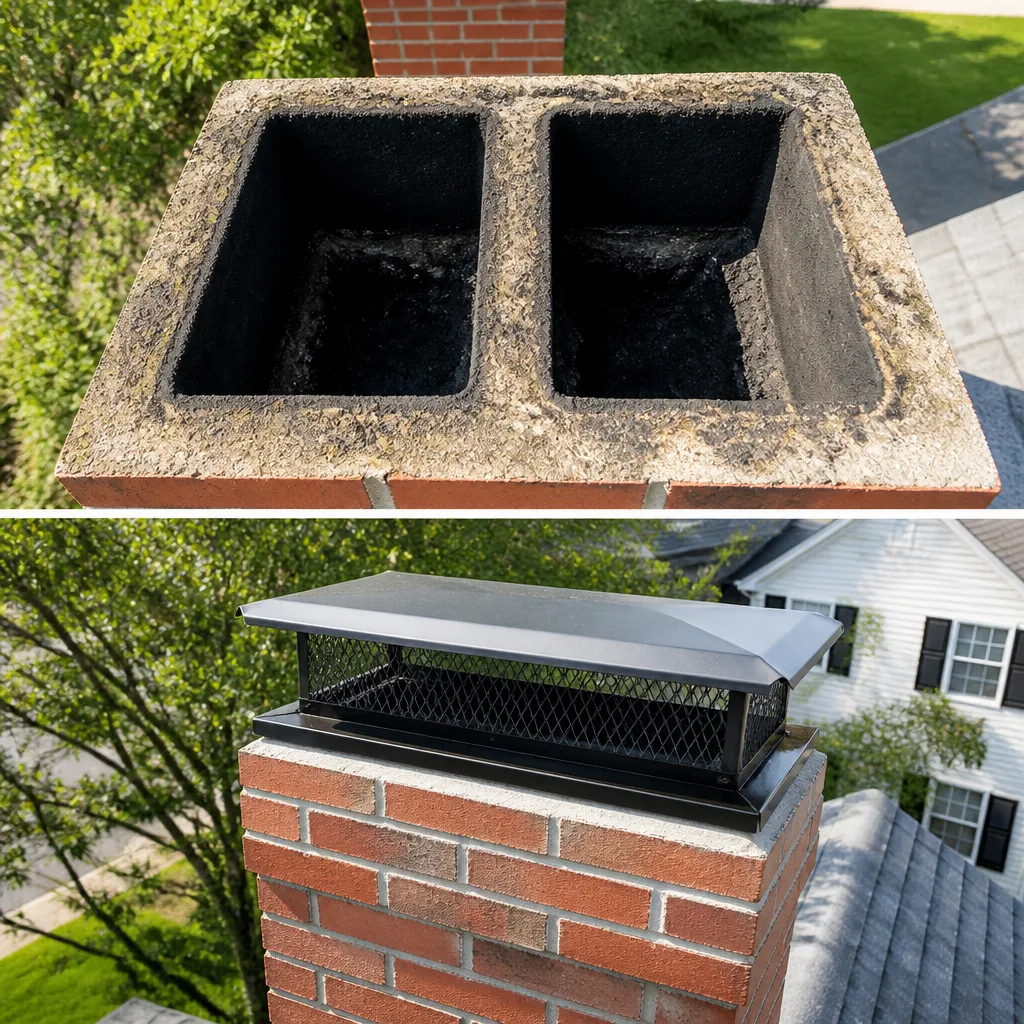
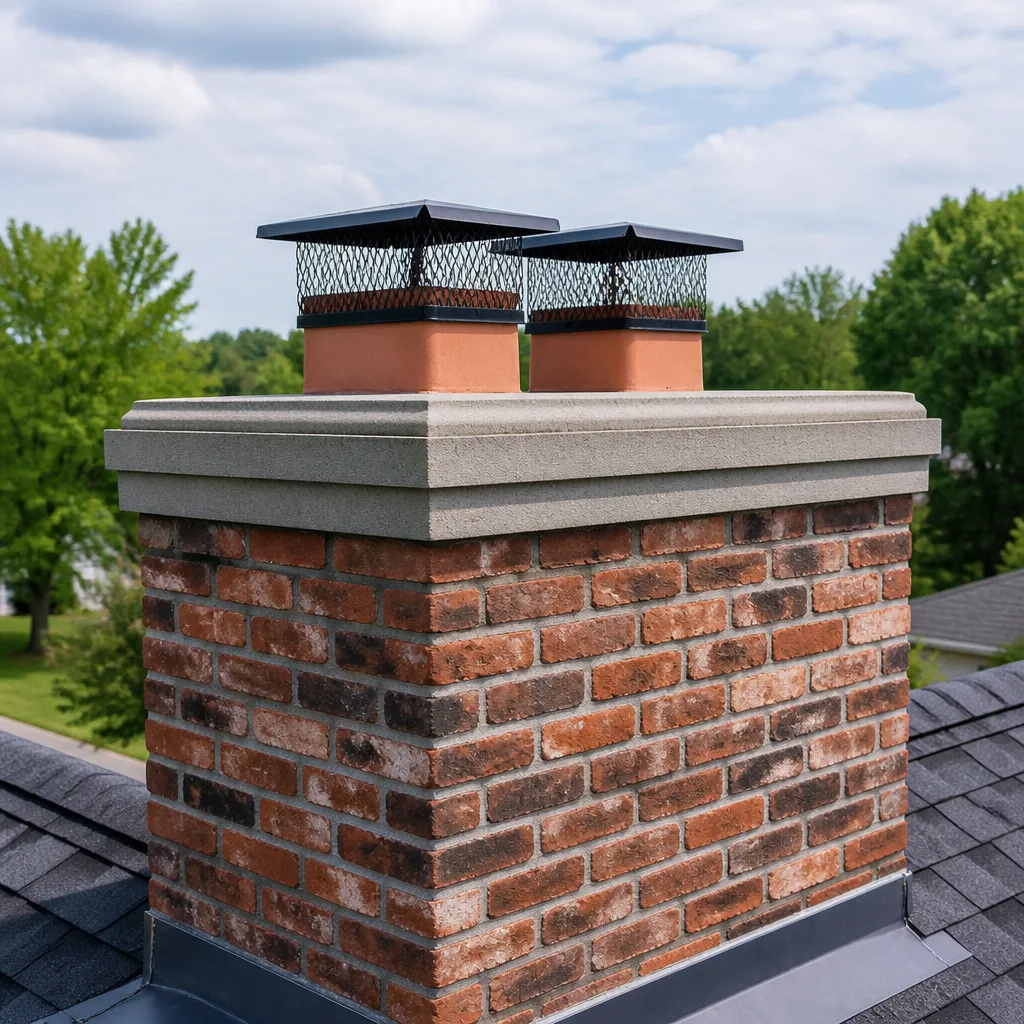
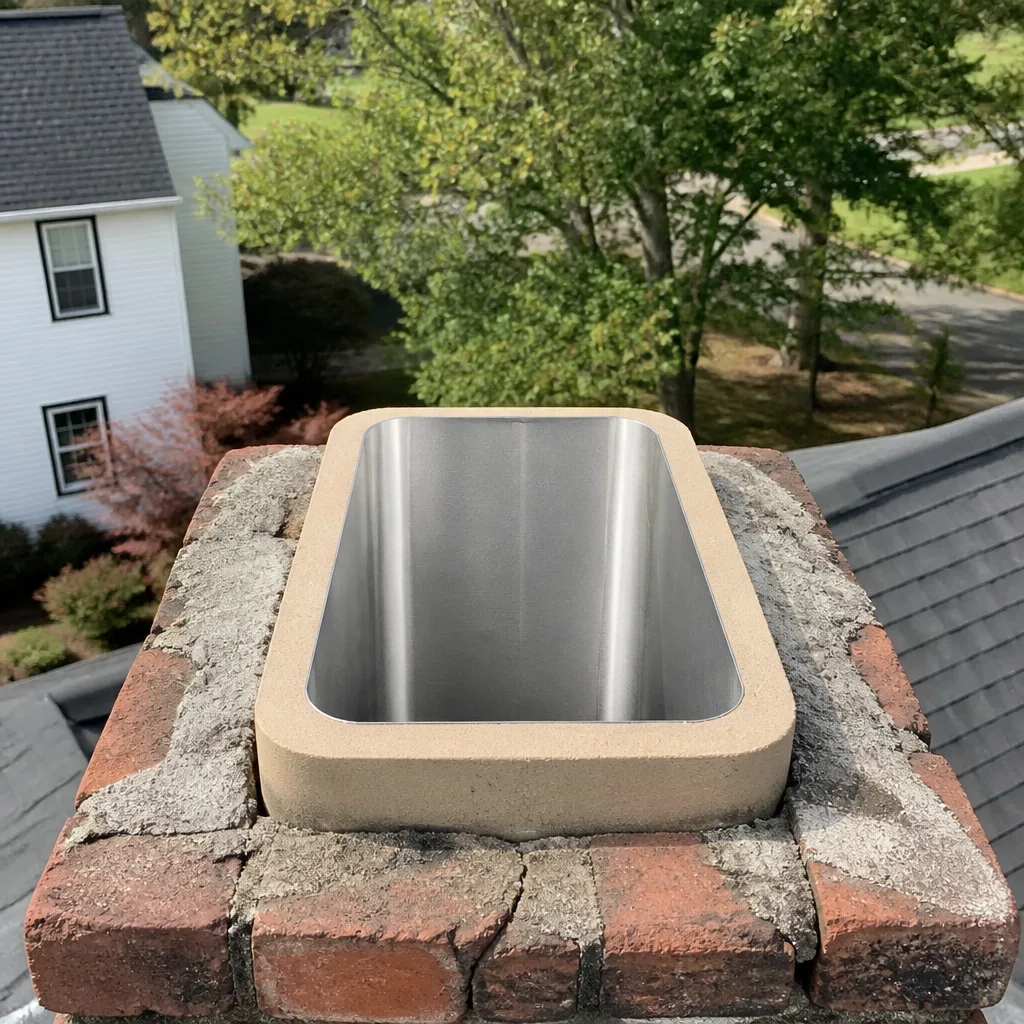
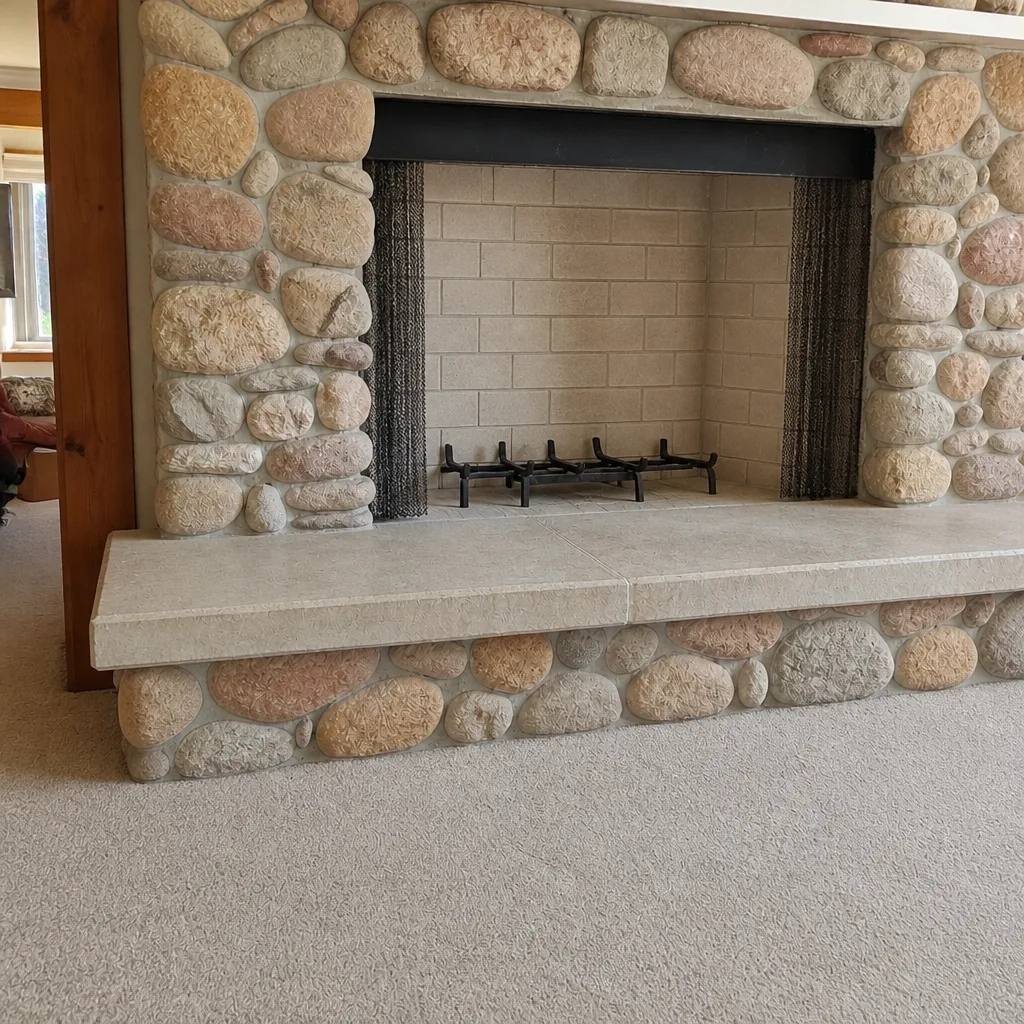
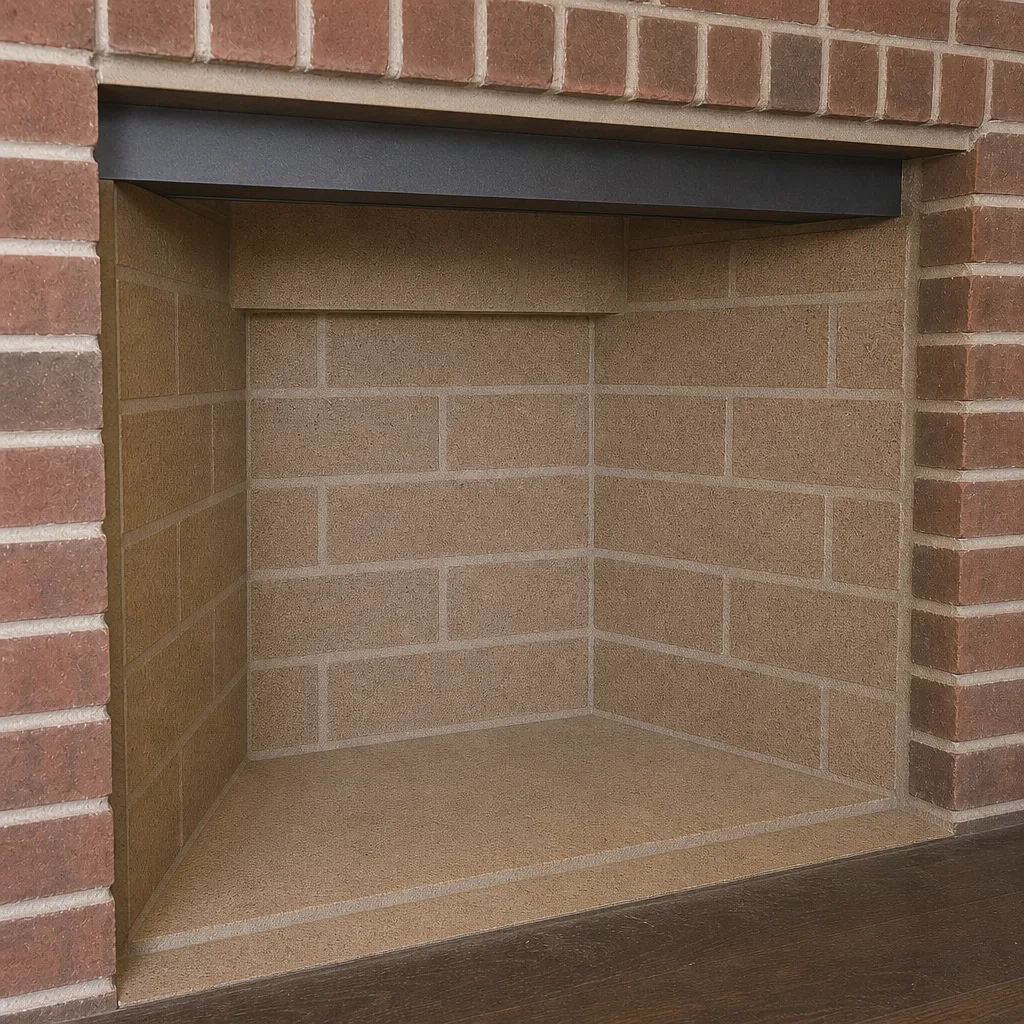
See the difference
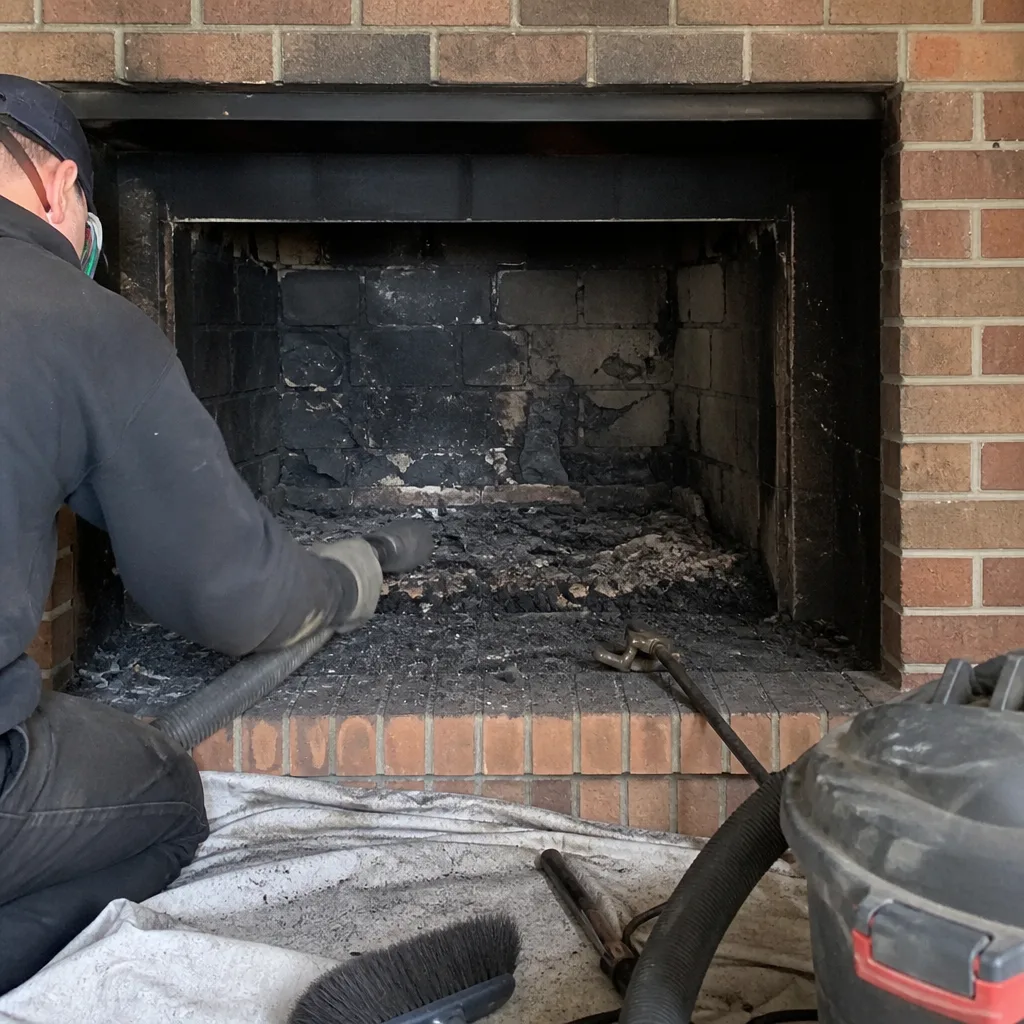 Before
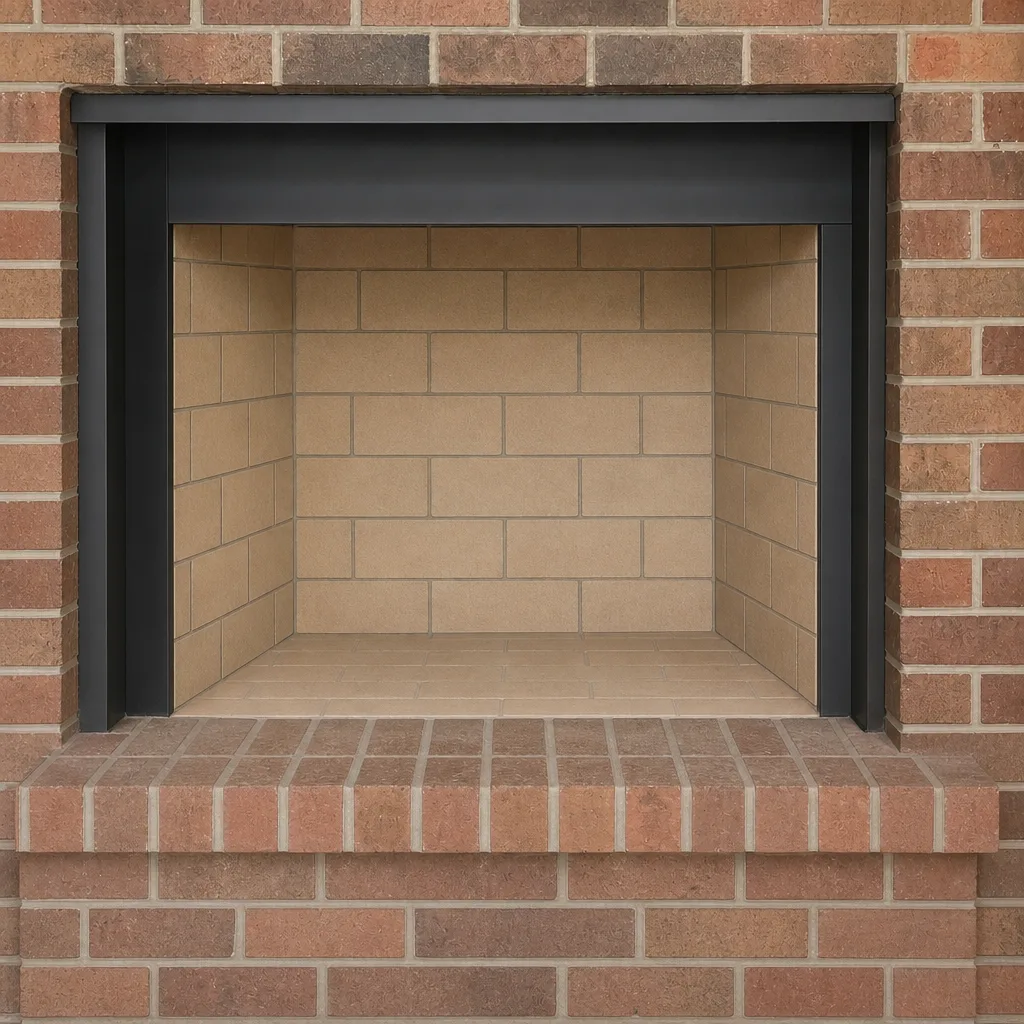 After
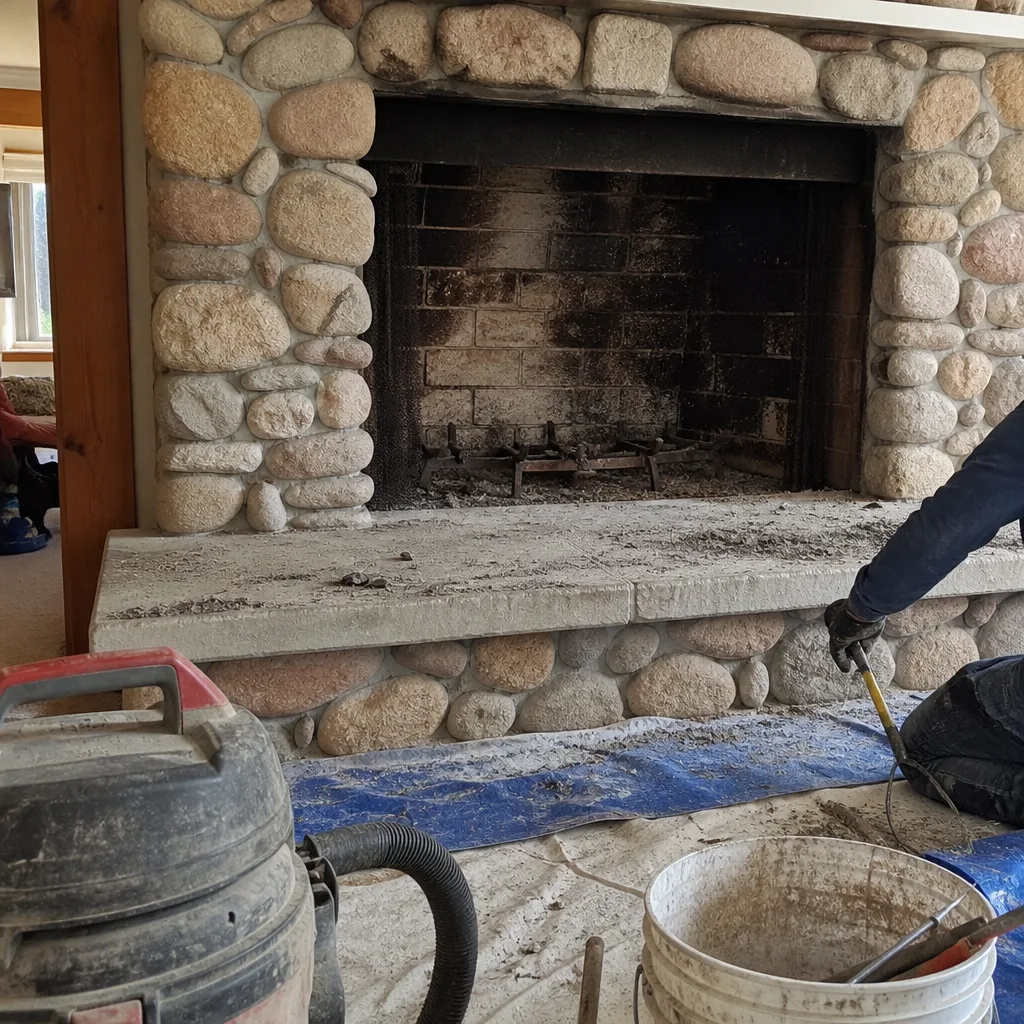 Before
 After
 Before
 After
How Burn Frequency Changes Your Schedule
The annual rule assumes moderate use. Real households vary a lot. The right cadence for your chimney depends on how often it burns and how it burns.
If your fireplace runs three or more nights a week through the colder months, you’re in the heavier-use category. That usually means two sweeps a year rather than one: a full sweep in early fall and a second pass in late winter if creosote buildup warrants it. Use seasoned wood and burn hot fires rather than long smoldering ones, and you’ll deposit less glazed creosote for the same number of fires.
If you burn a few times a season, the annual sweep is usually enough, but it still needs doing. A chimney that sits idle catches debris, nests and moisture the way an active one doesn’t. Skipping the sweep because the chimney “barely gets used” is one of the more common ways a small problem gets bigger.
If you burn occasionally but in a rental property or a home you don’t live in full time, put the annual appointment on your calendar and don’t rely on memory. Chimney issues on vacant properties have a way of growing silently.
Common Mistakes to Avoid
- Treating the annual sweep as the whole schedule. The sweep cleans the flue. It doesn’t catch a hairline liner crack or a loose cap. If it’s the only item on your list, an October surprise is likely.
- Skipping the spring inspection in a wet climate. In Kent, water damage is the most common path to major chimney repairs. A spring inspection catches the damage while the repair is still smaller.
- Waiting until October to book. Every household in the area thinks about the chimney in October. Booking in August gets you a slot without the scramble.
- Using a generic cap from a hardware store. A cap that doesn’t fit properly or corrodes quickly is worse than no cap. We install Gelco and Famco products because they hold up.
- Burning unseasoned wood. Green wood burns cool and deposits heavy creosote. Seasoned firewood burns hot and leaves less behind for the same heat.
- Ignoring mortar joint wear in spring. A repoint when the joint starts to flake is a modest job. A rebuild after another winter isn’t.
- Assuming a gas insert needs a sweep. Gas appliances need annual burner and vent checks, not flue brushing. The right schedule depends on fuel type.
When to Call a Professional
Call for a sweep when it’s been a year since the last one, or sooner if you’ve burned more than a cord of wood. Call for an inspection if you’ve moved into a home with an unfamiliar chimney, if you’ve never had a Level 2, or if you’re planning to install a new appliance. Call for repair when you see cracked masonry, a loose cap, a damaged crown, a hairline crack in the firebox, or a damper that won’t seat.
Call promptly if you smell smoke when the fireplace is cold, if you hear scratching in the flue, or if a CO detector has alarmed. Those situations don’t wait for the next scheduled visit. Anything that looks like an emergency on a cold evening can become one fast. Call (855) 658-3498. We answer 24/7. Fast dispatch from 7am to 7pm, Sunday through Friday.
Kent Chimney Sweep offers free estimates in Kent and across the surrounding area. We tell you what we found before we tell you what it costs, and we’ll say plainly when work can wait. Our technicians have up to 15 years of experience working on the whole system, from the crown to the firebox.
Frequently Asked Questions
Once a year for most households, timed just before the first fire in late summer or early fall. If you burn three or more fires a week through the season, plan on two sweeps a year. Homes that burn occasionally still need the annual appointment because idle chimneys collect nests, debris and moisture. Call (855) 658-3498 for an exact recommendation based on how you use your fireplace.
Because Kent’s wet winters do their damage between October and March, and a spring inspection catches that damage while it’s still small. The flue has just been through months of freeze-thaw cycling, so cracks from winter moisture show clearly. Repairs are also easier to schedule in spring than during the fall rush. Call (855) 658-3498 to book one.
No, gas appliances don’t need a flue brush. They need an annual service of the burner, pilot and vent, plus a spring check of the vent termination for blockage. Carbon monoxide is the safety concern with gas, so a working CO detector on every level is essential. Call (855) 658-3498 if you’re not sure what your gas insert needs.
HeatShield resurfacing restores the inside of a structurally sound flue from within, without full relining. A new liner – for example, a DuraFlex flexible liner – is the right choice when the existing flue has failed, is too irregular, or has no liner at all. The correct answer depends on what an inspection shows. Call (855) 658-3498 and we’ll tell you what we found before we tell you what it costs.
From the ground, check the cap for looseness or a torn screen, look for spalling mortar on the exterior, and confirm the crown is sloped and uncracked. From the hearth, look at the firebox for widening cracks and confirm the damper moves smoothly. Any of those going wrong is worth a call even if the annual sweep is months away. Call (855) 658-3498 with what you’re seeing.
Skipping the sweep lets creosote accumulate, which raises fire risk the next time you burn. Skipping the spring inspection lets water damage compound through another wet cycle, and it’s often the reason a small masonry repair becomes a bigger one. The worst case with either is a chimney failure in mid-winter when scheduling is hardest. Call (855) 658-3498 to get back on track.
The Bottom Line
Annual sweeping is the floor of chimney care, not the ceiling. A proper schedule has four checkpoints, not one: a spring Level 2 inspection to catch moisture damage, a summer liner check, a fall sweep before the first fire, and a mid-winter damper and creosote audit. Change the cadence when your burn frequency changes, and adjust it for fuel type. Between visits, glance at the cap, mortar and crown so you’re never relying on the annual appointment to catch everything. Kent’s wet winters make that full schedule worth keeping. If you’d rather not think about it, we can put your system on the calendar for you. Call (855) 658-3498. We answer 24/7. Fast dispatch from 7am to 7pm, Sunday through Friday.
Written by the team at Kent Chimney Sweep.