
Last updated November 25, 2026
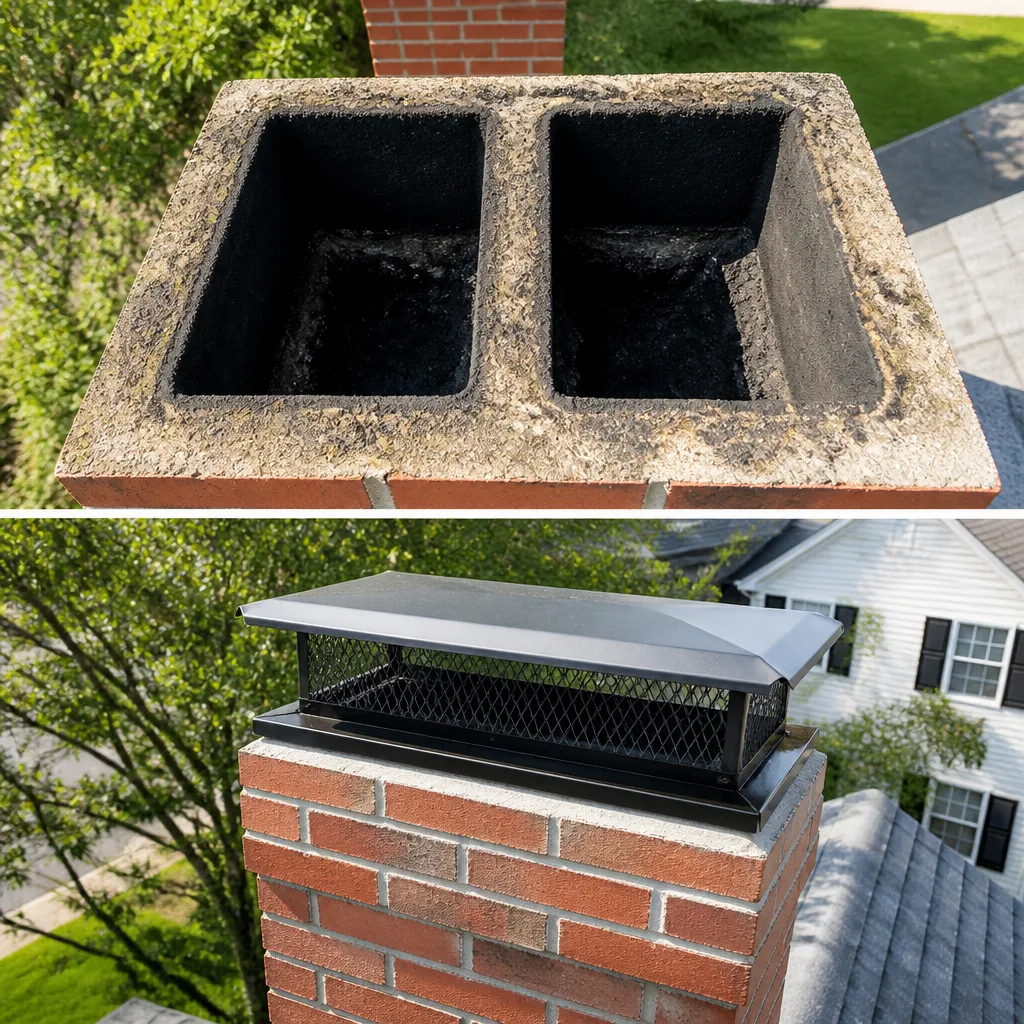 Sweep & inspection
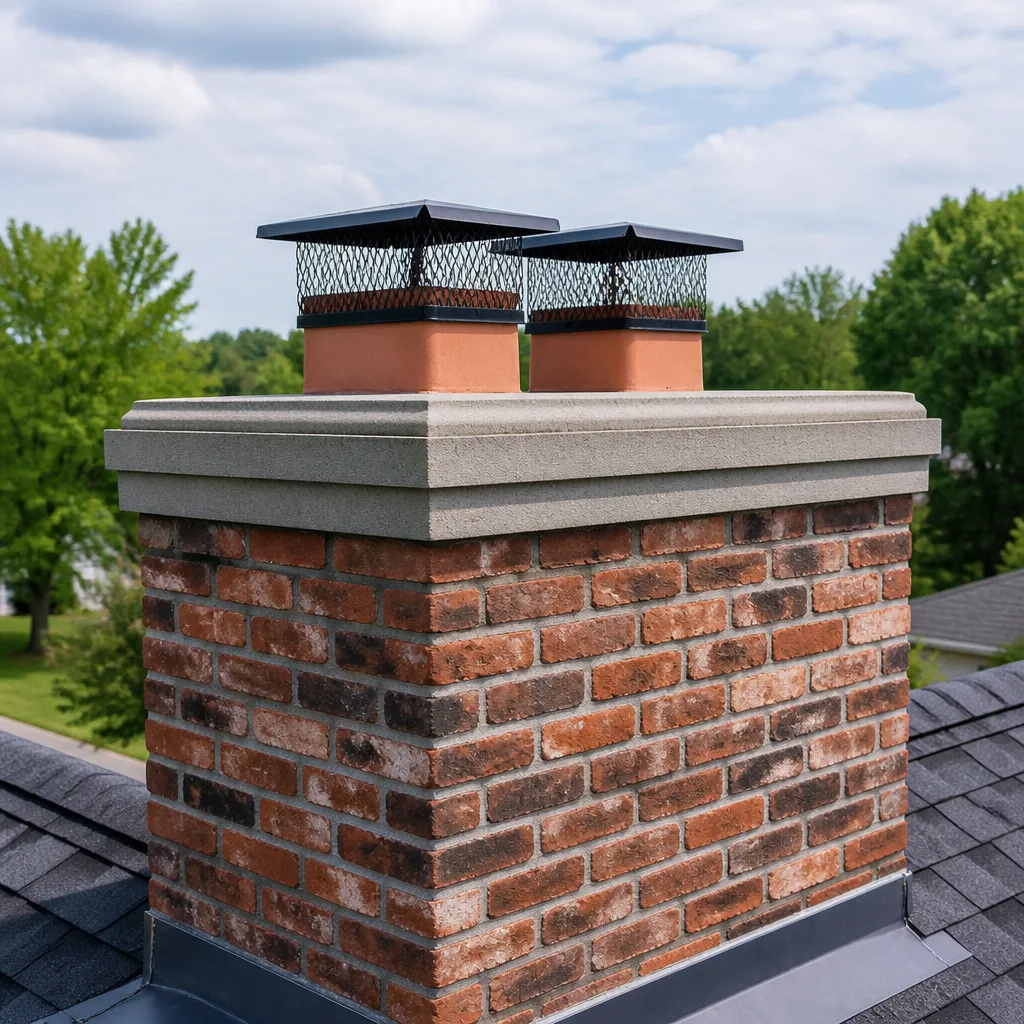 Caps & crowns
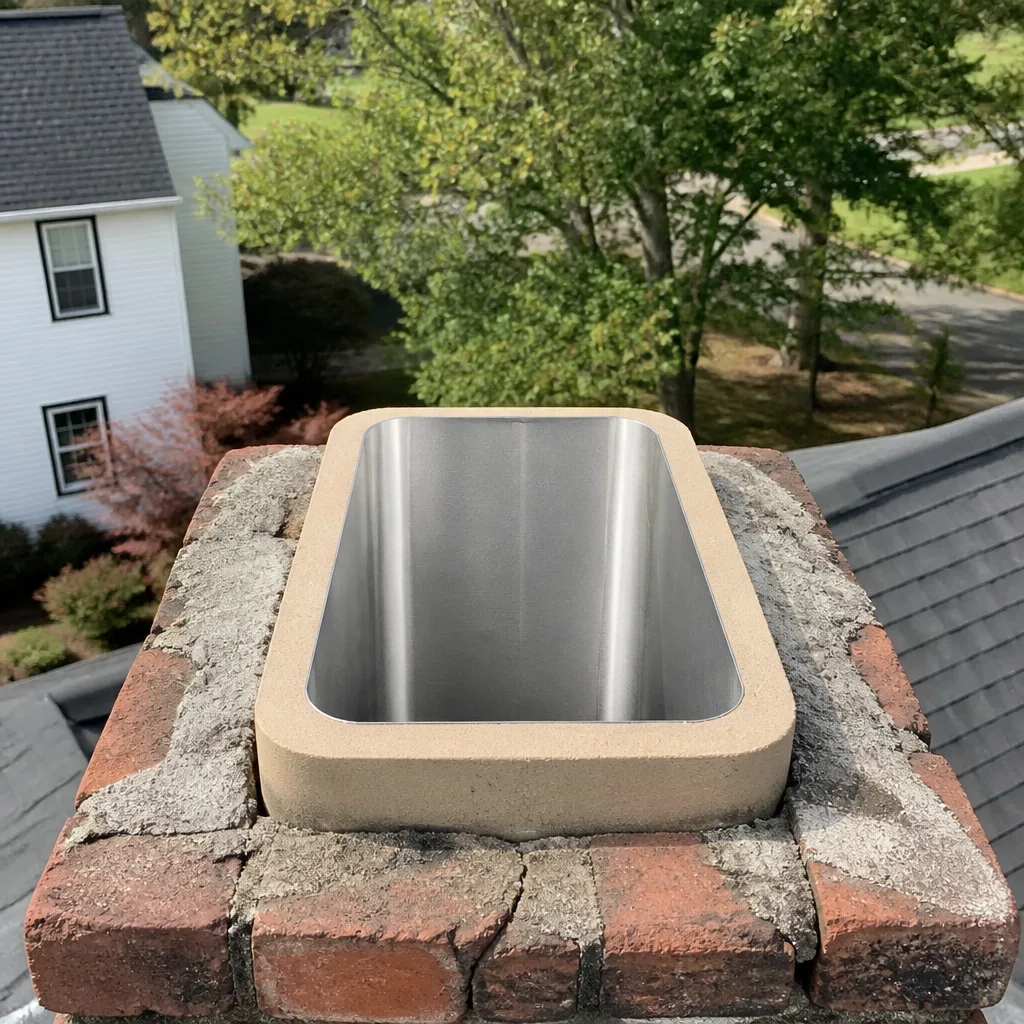 Flue relining
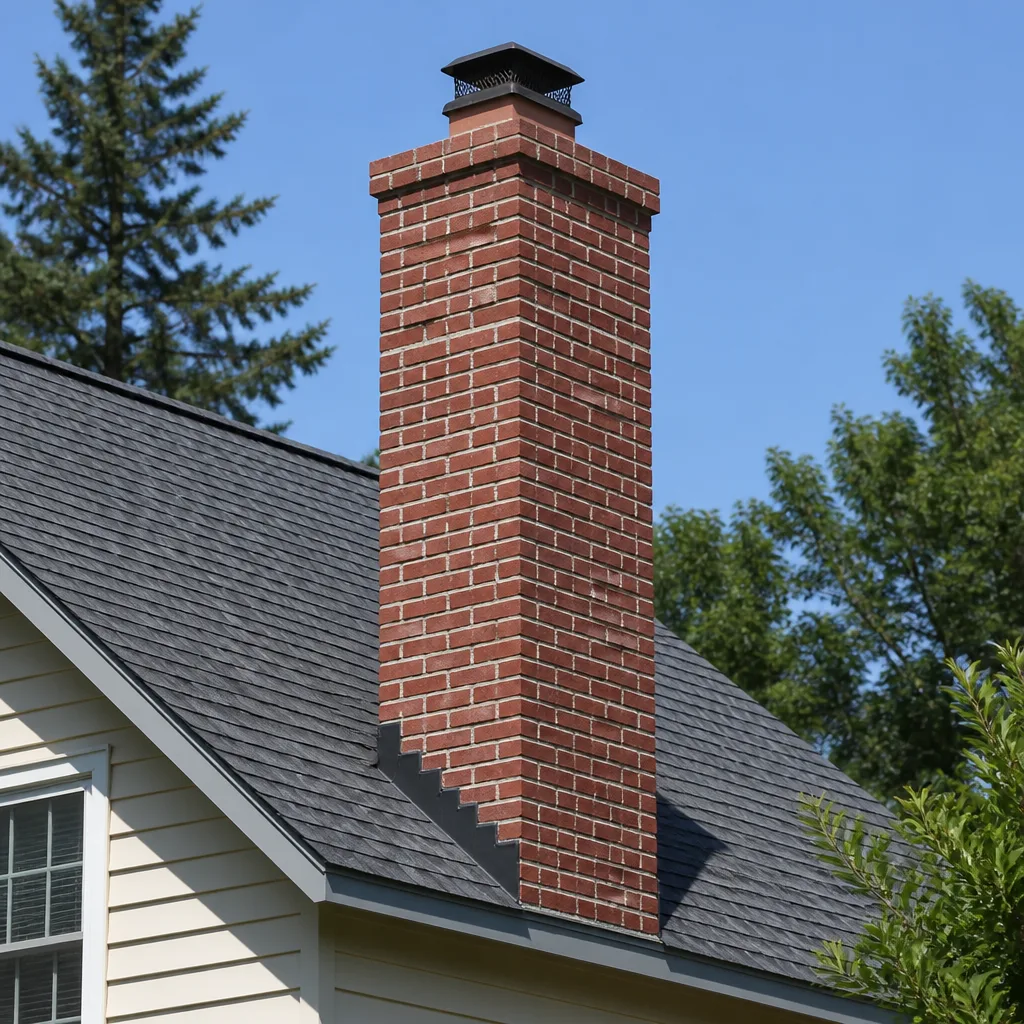 Masonry repair
 Gas fireplace service
Level 1 sweep and inspection to the NFPA 211 annual standard - flue, crown, cap, and flashing checked and photographed
Chimney sweep logs do not sweep chimneys. They loosen some creosote - which then falls where a brush and vacuum still have to collect it.
The Complete Guide to Chimney Cleaning in Kent
Most homeowners think a chimney is either working or it isn’t. That’s the misconception worth clearing up first. A flue can draft perfectly while a layer of glazed creosote builds on its walls, a crown cracks quietly above the roofline, and moisture seeps into the masonry through the wet months. None of that shows up as smoke backing into the room until the problem is well advanced. In Kent, where the climate keeps masonry damp for much of the year, those hidden conditions develop faster than the national guides suggest. This guide explains what chimney cleaning in Kent actually involves, what a proper inspection looks for, and how to read a sweep’s report so you know what you’re paying for.
Quick Answer
A chimney should be swept and inspected once a year, and in Kent that annual sweep matters more than most places because the region’s damp climate accelerates creosote buildup and masonry deterioration. Cleaning removes soot and deposits; inspection finds the moisture damage, cracked crowns, and failing liners that cleaning alone can’t fix. A full-system check from firebox to cap is the standard, not just a brush down the flue.
Styles & brands we work with
- Sweep & inspection
- Caps & crowns
- Flue relining
- Masonry repair
- Gas fireplace service
Table of Contents
- Why Kent’s Wet Climate Changes Chimney Maintenance
- The Three Levels of Chimney Inspection (and Which You Need)
- Firebox-to-Cap: Why the Sweep Is Only Step One
- What Professional Equipment Does That a Brush Kit Can’t
- How to Read a Sweep’s Report Without Getting Upsold
- How Often to Schedule Cleaning in Kent
- What Happens During a Professional Cleaning
- Common Mistakes to Avoid
Why Kent’s Wet Climate Changes Chimney Maintenance
Kent averages more than 150 rainy days a year. That single fact reshapes how a chimney ages here compared to a dry-climate home. National chimney guides are written for average conditions, and average conditions don’t describe the Pacific Northwest. Every one of those rainy days is working against an uncleaned flue in ways you can’t see from the living room.
Creosote is the residue left behind when wood smoke cools on its way up the flue. In a dry climate, that residue tends to stay crumbly and loose, the kind a brush lifts off fairly easily. In Kent, the moisture in the air and the higher humidity inside a house during the heating season change the picture. Creosote that absorbs ambient moisture becomes stickier. It clings to the flue walls and builds in layers rather than flaking away. Over a season or two, that layering can harden into a glazed, tar-like coating that is far more stubborn and far more combustible than the fluffy stage.
There’s a second moisture problem, and it has nothing to do with the fire. Kent’s rain finds its way in through the top of the chimney. A cracked crown, a missing cap, or a degraded mortar joint lets water into the masonry, where it soaks in and then freezes and thaws through the colder weeks. That cycle loosens bricks and spalls the surfaces. By the time a homeowner notices a stain on the ceiling or a musty smell, the damage has usually been spreading for more than one season.
What this means for maintenance is straightforward. A chimney in Kent benefits from inspection as much as cleaning, and the inspection should look at the entire exterior structure, not just the flue interior. We work on the whole system, not just the flue, because in this climate the water is often the bigger threat.
The creosote stages, briefly
- First degree: light, flaky soot that brushes off easily. Normal after a season of burning.
- Second degree: sticky, layered deposits that hold moisture and cling to the flue wall.
- Third degree: glazed, hardened creosote that requires rotary tools and often chemical treatment to break down safely.
The jump from first to third degree happens faster in a wet climate. That’s the core reason a Kent chimney shouldn’t wait two or three years between sweeps the way some national advice allows. Call Kent Chimney Sweep when you’re ready to set up a visit and we’ll tell you what we find before we tell you what it costs.
The Three Levels of Chimney Inspection (and Which You Need)
Not every inspection is the same, and understanding the difference keeps you from paying for more than you need, or less than the situation calls for. The trade recognizes three inspection levels, each with a different scope and a different price point. For most Kent homeowners burning wood through the heating season, a Level 2 inspection is the right baseline, paired with an annual Level 1 check.
Level 1 Inspection
This is the visual check that comes with a routine annual sweep. The technician examines the readily accessible portions of the chimney, the firebox, the damper, and the visible flue, looking for obvious blockages, soot buildup, and signs of wear. It’s quick, it’s inexpensive, and it works well when nothing has changed since the last visit and the chimney is in known-good condition.
Level 2 Inspection
This is the standard for most Kent homes, and it’s what you want after any change to the system or any period of disuse. A Level 2 goes further: it includes a video camera scan of the flue interior, an inspection of accessible attic and crawlspace areas where the chimney passes through, and a check of the chimney’s exterior. For older Kent homes built between the 1970s and 1990s, a Level 2 is worth doing at least once even if the chimney seems fine, because the flue liner materials common in that era have had decades of wet winters to develop cracks you can’t see from below.
Level 3 Inspection
This is a diagnostic inspection, and it’s reserved for a specific reason: when a Level 1 or Level 2 has turned up a serious concern that can’t be resolved without opening up part of the chimney. That might mean removing a section of wall or masonry to look at a hidden portion of the flue. A Level 3 is never routine. If a sweep recommends one, ask what the Level 2 found that makes it necessary.
Which applies to your Kent home
- Burning most winters, nothing changed: Level 1 with your annual sweep.
- New home, changed appliance, long disuse, or first inspection in years: Level 2.
- A known problem needs a closer look: Level 3, only after the lower levels.
In our experience, the biggest gap in Kent isn’t that people skip inspections entirely. It’s that they get the Level 1 and assume it caught everything. The camera scan in a Level 2 is what finds the damage that lives above the firebox.
Firebox-to-Cap: Why the Sweep Is Only Step One
Here’s where a lot of chimney work goes wrong. A sweep comes out, brushes the flue, and leaves. The flue is cleaner, but nobody looked at the crown, the cap, the flashing, or the firebox mortar. On an older Kent home, those components are where the real problems hide. A swept chimney is a starting point, not a finish line.
Kent has a substantial stock of homes built from the 1970s through the 1990s, and the chimneys on those houses have a few predictable weak points. The mortar joints on the exterior have had forty-plus wet winters to erode. The crown, a concrete or mortar cap at the very top, develops hairline cracks that let water in with every rain. The firebox brickwork takes the most heat and the most thermal cycling, so it’s often the first place to show cracks or spalling.
A firebox-to-cap inspection works through the system from the bottom up:
- Firebox and hearth: check the brickwork, mortar joints, and fireback for cracks or gaps that could let heat or smoke escape into the structure.
- Damper and smoke chamber: confirm the damper opens and seals correctly and that the smoke chamber isn’t coated with creosote or obstructed.
- Flue interior: assess creosote level, look for cracked or missing liner tiles, gaps in a stainless liner, or signs of moisture.
- Exterior masonry: examine the mortar joints, the brick faces, and the chimney structure from the roofline for spalling, leaning, or water staining.
- Crown and cap: inspect the crown for cracks and the cap for damage or loss. These close the most common entry point for water.
We install Gelco and Famco caps and covers to spec, and we build and repair crowns because those two components do more to prevent water damage than almost anything else you can do to a chimney. A cap keeps rain and animals out of the flue. A sound crown keeps water out of the masonry. Together they’re the difference between a chimney that lasts and one that keeps needing repair.
What Professional Equipment Does That a Brush Kit Can’t
A hardware-store brush and rod kit will knock loose soot off a flue wall. That’s about where the comparison ends. Professional chimney cleaning uses equipment built for the two things a consumer kit can’t handle: capturing airborne dust inside a home, and breaking down the hardened creosote that wet climates produce.
Professional chimney vacuums
The single biggest difference a homeowner notices is the mess, or the absence of one. A professional chimney vacuum uses high-suction, HEPA-grade filtration running continuously while the flue is being worked. It pulls the loosened soot and dust out of the air before it settles on your furniture, your floors, or your lungs. A homeowner with a handheld vacuum and a tarp isn’t capturing that fine soot; it ends up throughout the room. Professional vacuums also run the whole time the flue is being swept, not after, which is what keeps the room clean.
Rotary systems and power sweeping
A stiff brush on a rod scrubs at the surface. It will not cut through glazed third-degree creosote, and forcing it can damage a liner. Rotary systems spin a set of articulated chains or whips at controlled speed and pressure, which breaks hardened deposits off the flue wall without gouging it. For the sticky second-degree and hardened third-degree creosote that Kent’s climate encourages, a rotary system is often the only way to clean a flue properly and safely. Chemical treatments sometimes go along with it to soften deposits before the rotary work begins.
Video inspection cameras
A camera scan lets the technician actually see the full length of the flue, including the offset and the area above it that no brush-and-mirror check can reach. We recommend a camera inspection on any flue that hasn’t been looked at recently. Without it, nobody is guessing about the liner condition; they’re either guessing or they’re not looking.
One safety note worth stating plainly. Chimney work involves ladders, rooflines, and enclosed spaces, and a glazed, neglected flue carries a real fire risk. A trained professional with the right equipment is the safe route, and it’s the only way to know what the flue actually looks like inside. For hands-on fixes to the firebox and its components, see our fireplace repair service.
How to Read a Sweep’s Report Without Getting Upsold
This section is the reason many homeowners call us. It’s the fear of being told you need a liner or a full rebuild you have no way to verify. A legitimate report is specific and evidence-based. An upsell is vague and urgent. Learning to tell the two apart puts you in control of the decision.
When a sweep finishes, you should get a written account of what was found and, where relevant, photos or video of the problem. We tell you what we found before we tell you what it costs, and the recommendation should come with the evidence attached. Here’s how to evaluate what’s on the page.
Signs of a legitimate recommendation
- It points to the evidence. The report shows you the cracked tile, the glazed section, or the crown crack, not just describes it.
- It explains the consequence. A good report connects the finding to what happens if it’s left alone: a cracked crown lets water into the masonry all winter, a gap in the liner can let heat reach combustible framing.
- It names the right material for the problem. A flexible DuraFlex system is specified for older, irregular flues that a rigid liner can’t serve; a different recommendation might be right for a straighter flue. The material should match the diagnosis.
- It tells you when work can wait. A legitimate inspection often says a minor finding can be monitored for another season. If every visit turns into a required repair, be skeptical.
- It separates cleaning from repair. The sweep and the inspection are one thing; the repair estimate is another, and it should stand on its own.
Signs to slow down
- The recommendation arrives with no photos and no way to see the problem.
- The urgency is generic (“you need this before it’s too late”) rather than tied to the specific finding.
- The work is quoted before any inspection was done.
- The material is described as “whatever we have” rather than a named, professional-grade product.
HeatShield liner resurfacing is a good example of a recommendation that deserves explanation, because it’s genuinely a middle path. It’s a non-invasive alternative to full relining that extends the life of a flue without the cost of a full demolition and rebuild. But it’s not right for every liner. The report should explain why resurfacing fits the condition of your flue, or why a full installation is required instead. If a recommendation is for chimney repair that you can’t reconcile with what was found, ask the technician to walk you through it in person before you agree to anything.
How Often to Schedule Cleaning in Kent
The standard advice is once a year. For Kent, that’s a floor, not a ceiling. How often your chimney actually needs cleaning depends on how much you burn, what you burn, and what the previous inspection found. The general rule of thumb in the trade is that a chimney should be swept when there’s about an eighth of an inch of soot or creosote on the flue wall. In a wet climate like Kent’s, that threshold arrives sooner than it would in a drier region.
Use this as a starting point:
- Regular wood burning through the heating season: annual sweep and Level 1 inspection, with a Level 2 at least once if the flue hasn’t had a camera scan recently.
- Heavy burning, or a lot of slow, smoldering fires: consider a mid-season check, especially if the wood has been less than fully seasoned.
- Occasional fires, a few a season: annual inspection is still worth keeping; the sweep itself may be lighter.
- Long disuse or a new-to-you home: a Level 2 before the first fire, no matter when the last sweep was.
One Kent-specific factor pushes toward annual attention: the damp. Even a chimney that isn’t heavily used can accumulate moisture-related damage through the wet months. An annual visit catches that early, while it’s still a repairable crack rather than a rebuild. If you’ve seen signs of a water problem, staining, a rusted damper, or a musty smell in the firebox, don’t wait for the next scheduled sweep. Scheduling a chimney sweep early is far less costly than repairing water damage that had a season to spread.
What Happens During a Professional Cleaning
Knowing what a proper cleaning involves helps you judge whether the visit you’re paying for is thorough. Here’s the sequence a full-system service follows, from arrival to the report at the end.
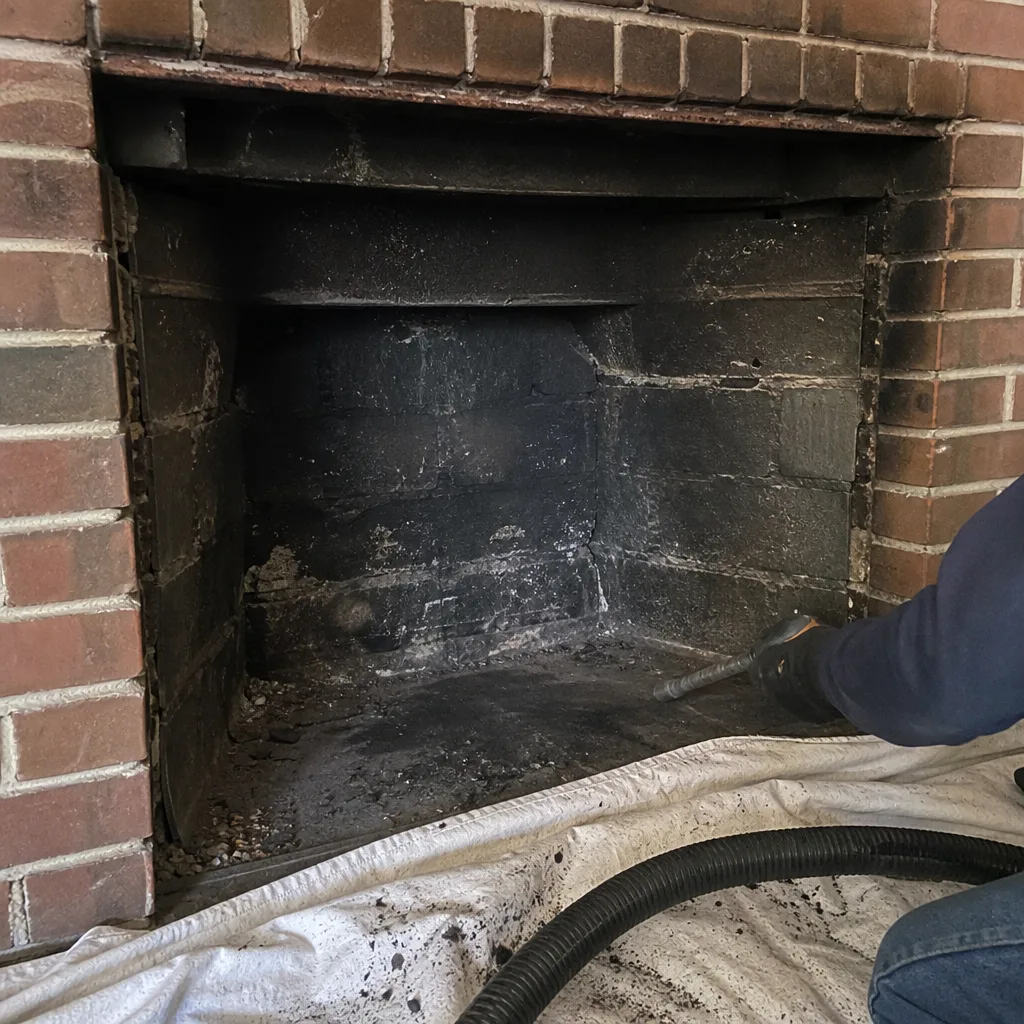
- Set up and protect the space. Drop cloths go down around the firebox, and the professional vacuum is positioned and running before any work begins.
- Clear the firebox. Any ash and debris in the firebox and on the smoke shelf are removed.
- Sweep the flue. Brushes and, where needed, rotary equipment work up the flue to remove soot and creosote. The vacuum captures what the brushing loosens.
- Clean the damper and smoke chamber. Soot on the damper and in the smoke chamber is cleared so the flue can draft properly.
- Scan the flue with a camera. On a Level 2, the camera runs the full length of the flue to check the liner for cracks, gaps, and remaining deposits.
- Inspect the exterior. The crown, cap, flashing, and visible masonry are checked for damage and water intrusion.
- Report and recommend. You get a written summary of what was found, with photos where relevant, and any recommended repairs explained along with the estimate.
The parts that matter most are the first and the last. A cleaning that doesn’t protect your home from soot is a poor cleaning, and a visit with no written report leaves you with nothing to act on. We handle the sweep, the inspection, the cap and crown, and the liner work as one service, so nothing gets handed off to a second contractor who wasn’t there for the inspection. When it comes to the materials, we work with professional-grade product lines like DuraFlex, HeatShield, Gelco, Olympia Chimney, Famco, and Copperfield, the same trade brands specified for serious repair work.
Common Mistakes to Avoid
- Treating the sweep as the whole job. A clean flue with a cracked crown still takes on water all winter. Cleaning removes deposits; inspection and repair address the structure around them.
- Skipping the annual visit in a wet year. Kent’s moisture doesn’t take a season off. The creosote layering and the masonry damage both keep developing whether the chimney is burning or not.
- Burning unseasoned wood to save effort. Green or damp wood produces far more creosote, and in a humid climate that residue goes sticky and layered fast. Seasoned wood keeps the deposits manageable.
- Relying on a hardware-store brush kit. It lifts loose soot but can’t cut glazed creosote, and it doesn’t capture the fine dust that ends up in the room. The mess and the missed deposits both matter.
- Ignoring a cracked crown or a missing cap. These are the most common entry points for water, and water in the masonry is what drives most serious chimney damage in Kent.
- Accepting a repair quote with no evidence. If the recommendation doesn’t come with photos or a clear explanation of what was found, ask for it before agreeing. You should be able to see the problem yourself.
- Waiting for smoke to back up before calling. By the time a flue is blocked enough to draft poorly, the underlying condition has usually been building for a while. Annual inspection catches it sooner.
See the difference
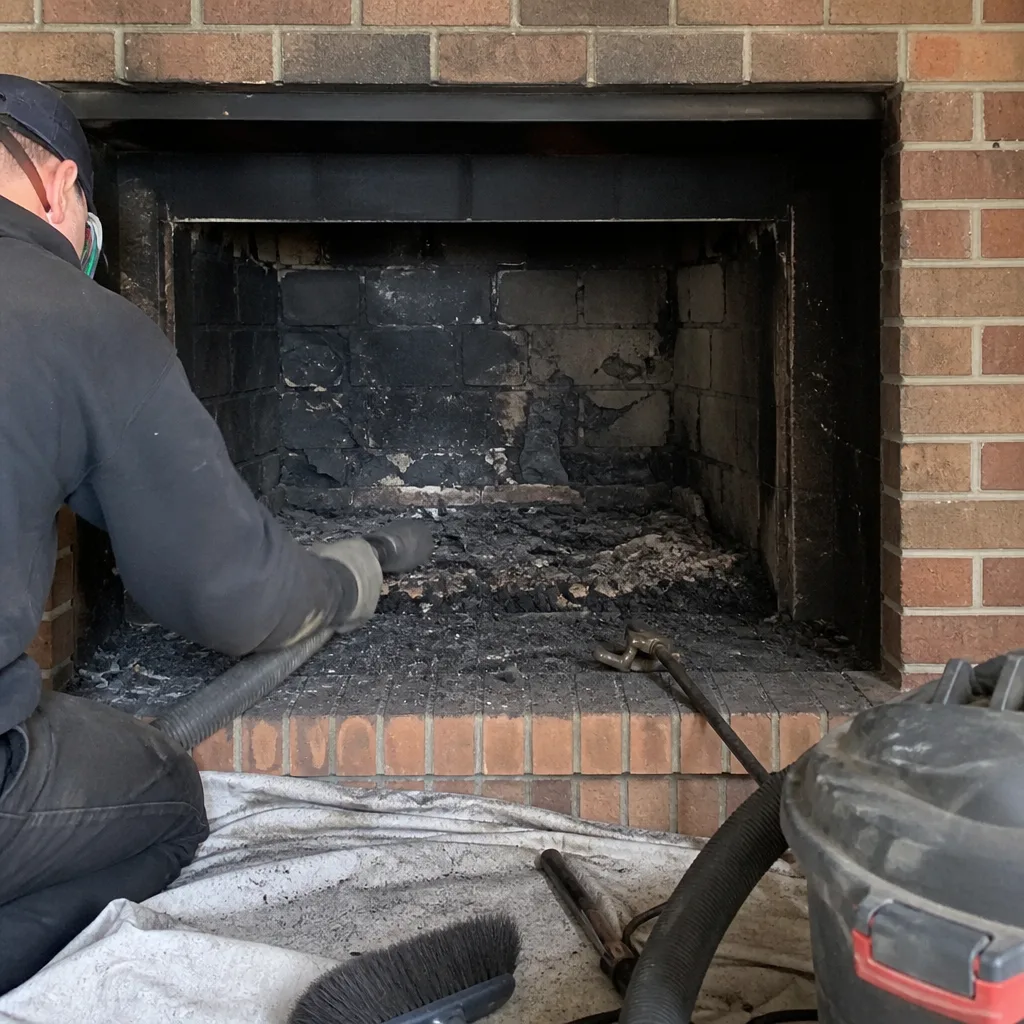 Before
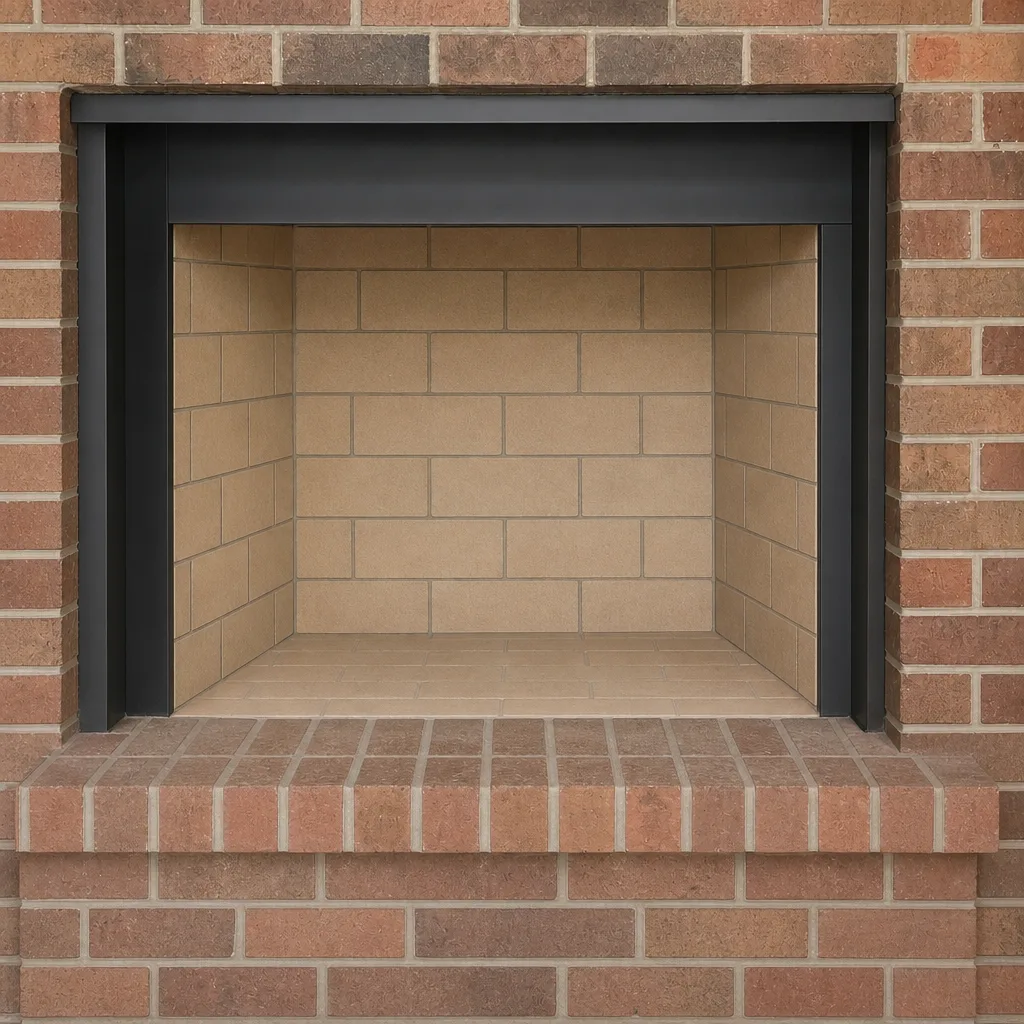 After
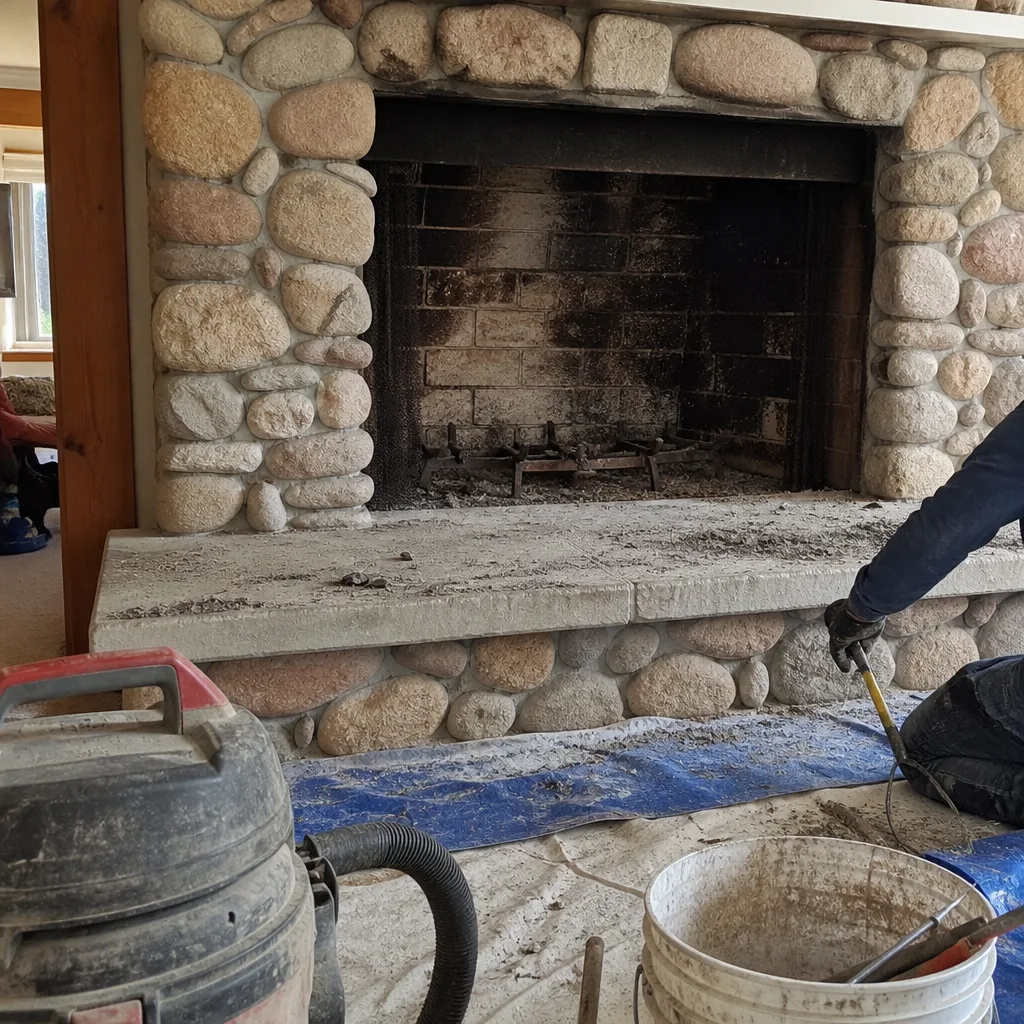 Before
 After
 Before
 After
When to Call a Professional
Some situations call for a trained technician rather than a wait-and-see. Call us if you’ve never had the chimney inspected and you don’t know its condition, if you’ve just bought a home and want a baseline, or if the chimney hasn’t been used in a year or more. Call if you’re seeing signs of a water problem, staining on the ceiling or walls near the chimney, a rusted damper, or crumbling mortar on the exterior. Call if smoke backs into the room when you light a fire, if you smell creosote or a strong smoky odor even when nothing is burning, or if you’ve had a chimney fire, even a small one. And call if a previous inspection left you with recommendations you couldn’t verify, because we’ll show you what we find.
Kent Chimney Sweep offers free estimates in Kent. Call (855) 658-3498. We answer 24/7. Fast dispatch from 7am to 7pm, Sunday through Friday.
Frequently Asked Questions
It depends on the flue, the creosote level, and whether you’re adding an inspection, which is why the price is set per job by the written estimate after we’ve seen the chimney. A straightforward sweep on a maintained flue is a smaller job than a heavy glazed deposit that needs rotary work, and a Level 2 inspection is a different scope than a Level 1. The estimate is free, and you’ll know the scope and the price before any work begins. Call (855) 658-3498 for an exact quote.
Only if the inspection shows the flue can’t safely contain the combustion gases and heat, and you should be able to see that evidence yourself. A cracked clay tile, a gap in a stainless liner, or a deteriorated flue wall that a camera scan reveals are the kinds of findings that warrant relining, or in some cases HeatShield resurfacing as a non-invasive alternative when the flue condition allows it. If a technician recommends a liner, ask to see the photos. Nothing should be recommended without camera evidence you can review. Call (855) 658-3498 and we’ll walk you through what we find.
Once a year as a baseline, and in Kent that annual schedule is worth keeping even in lighter-use years because the wet climate accelerates both creosote buildup and moisture damage. If a lot of wood is burned, or the wood isn’t fully seasoned, a mid-season check can make sense. Call (855) 658-3498 to book a sweep and we’ll tell you what your particular flue needs.
Two things build up in parallel: creosote inside the flue and water damage outside it. The creosote hardens through the stages toward glazed, combustible deposits, and the cracked crown or missing cap lets moisture into the masonry, which loosens bricks and spalls the surfaces season after season. Neither shows obvious signs until it’s advanced. A skipped year or two is exactly how a chimney that seemed fine becomes a repair project. Call (855) 658-3498 to get it checked.
Not with professional equipment. A high-suction chimney vacuum with proper filtration runs continuously while the flue is swept, capturing the fine soot before it settles into the room, and drop cloths protect the floor around the firebox. A homeowner using a hardware-store kit has none of that protection, which is why the DIY route often leaves a film of soot behind. Call (855) 658-3498 to schedule a cleaning with the right setup.
Yes. With more than 150 rainy days a year, moisture drives a real share of chimney problems here, from sticky creosote that clings to the flue wall to masonry damage from water entering a cracked crown or an uncovered flue. A cap and a sound crown do more to prevent that water damage than almost any other maintenance step, and an annual firebox-to-cap inspection catches both issues early. To have your whole system looked over, call (855) 658-3498.
The Bottom Line
Chimney cleaning in Kent isn’t just soot removal. In a climate this wet, the annual visit should check the whole system: sweep the flue, scan the liner, inspect the firebox, and look at the crown and cap from the roofline down. The creosote builds stickier here, the masonry takes on more water, and the homes built decades ago have liners that deserve a close look. Keep the sweep on schedule, ask to see the evidence behind any repair recommendation, and treat a sound crown and cap as the cheapest protection you can buy. Professional equipment handles the deposits a brush kit can’t and keeps your home clean while it does.
Kent Chimney Sweep covers sweep, inspection, repair, fireplace repair, and cap and crown work as one service, using professional-grade materials from brands like HeatShield, Gelco, Olympia Chimney, and Famco. For a free estimate, call (855) 658-3498. We answer 24/7. Fast dispatch from 7am to 7pm, Sunday through Friday.
Written by the team at Kent Chimney Sweep.