
Last updated November 25, 2026
 Sweep & inspection
 Caps & crowns
 Flue relining
 Masonry repair
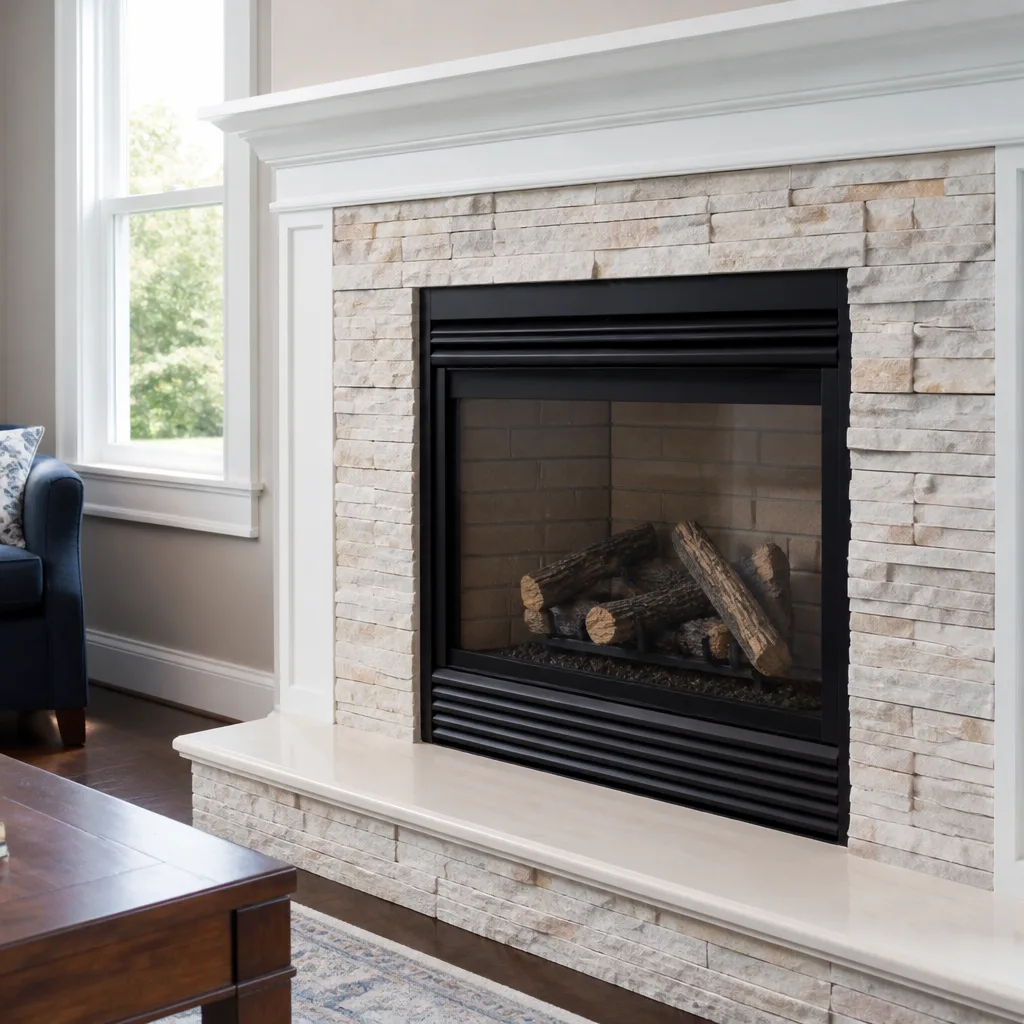 Gas fireplace service
Level 1 sweep and inspection to the NFPA 211 annual standard - flue, crown, cap, and flashing checked and photographed
Chimney sweep logs do not sweep chimneys. They loosen some creosote - which then falls where a brush and vacuum still have to collect it.
Chimney Cleaning Warning Signs: A Kent Homeowner’s Reference Guide
Most of what a chimney tells you isn’t visible. A leaking pipe leaves a stain on the ceiling. A cracked window lets in a draft you can feel. Chimneys fail quietly: creosote builds in the flue where no light reaches, a crown cracks on the far side of the chase, and gases start backing into the room with no smell you’d recognize as trouble. The warning signs are odor-based and behavior-based more often than they’re visible, and that’s why so many Kent homeowners find out something’s wrong only when a fire won’t draw or a sweep finds a problem that’s been building for seasons. This guide teaches you to interpret what your fireplace is telling you, not just what it looks like, and ranks each sign by how soon you need to act.
Quick Answer
Chimney warning signs in Kent fall into three groups: what you smell, how the fire behaves, and what you can see from inside the firebox or outside the house. A smoky smell with the fireplace cold, lazy flames, smoke rolling into the room, rust streaks or crumbling firebrick, and white staining on exterior masonry are the most common signs a sweep is overdue. Signs that involve smoke rollout, backdraft, or visible damage to the flue or crown belong in the call-today category, not the watch-and-monitor pile.
Styles & brands we work with
- Sweep & inspection
- Caps & crowns
- Flue relining
- Masonry repair
- Gas fireplace service
Table of Contents
- The Smell Index: What Each Chimney Odor Means
- Inside the Firebox: Signs of Liner Failure
- How Your Fire Behaves During a Burn
- Warning Signs You Can See From Outside
- Watch-and-Monitor Versus Call-Today: A Triage Hierarchy
- Why Kent Weather Shapes These Signs
- A Seasonal Walk-Through for Kent Homes
- What a Professional Inspection Actually Finds
The Smell Index: What Each Chimney Odor Means
Chimney odors are the most underrated diagnostic tool a homeowner has, because each cause has a distinct signature once you know what to listen for. The first rule: any smell from a chimney that hasn’t been used in weeks is worth noting. Overnight cooling, damp air pushing down the flue, or a flue full of creosote all produce a smell, and none of them are the clean-chimney baseline. Here’s how to tell them apart.
- Campfire or woodsmoke in summer, with the fireplace unused: this is the classic creosote smell. The residue left from last winter’s burns is releasing scent as the flue warms and cools. It’s a reason to book a sweep before fall, not an emergency in July, but it does mean the flue isn’t clean.
- Acrid, sharp, almost chemical smoke smell: creosote that has glazed into a harder deposit. Glazed creosote is volatile, and it’s the form that most easily ignites. If you smell this, treat it as a call-today situation and don’t burn until it’s inspected.
- Rotting, dead-animal, or ammonia smell: animal intrusion. Birds, squirrels, and raccoons get into flues and behind dampers, and nests and droppings block draft and add fuel load. A chimney with an animal in it is unsafe to light.
- Damp, musty, earthy smell: moisture. Water is getting into the masonry or the flue, and it’s the most common root cause of chimney deterioration in the Pacific Northwest. Even the smallest leak gets worse each rainy season.
- Sudden smoke smell pouring into the room when the fire is lit: backdraft. The flue is blocked, undersized, or the house is depressurized enough to overcome the draft. Don’t mask this with a window crack and carry on; smoke rollout means exhaust is entering your living space.
That last one matters for carbon monoxide, because the same venting failure that sends smoke into the room can send colorless, odorless CO into the room unaccompanied by anything your nose will detect. A working CO alarm on each floor is a baseline safety measure for any Kent home with a wood-burning fireplace or wood stove. For related context on how chimneys vent and why cleaning matters, see our Kent Chimney Sweep service overview.
Inside the Firebox: Signs of Liner Failure
The firebox is where you get your clearest visual read, but the clues are subtle and you have to look for them. Liner failure in a masonry chimney usually announces itself in the firebox long before it shows up as a draft problem. Cracks in the flue tile let moisture in, moisture drives rust through the surrounding steel, and rust stains appear on the firebox walls or the damper frame before anything fails outright. Every one of these signs is worth a professional’s look, and every one means don’t burn until it’s checked.
- Rust streaks or orange staining on firebox walls or the damper: this means moisture is getting through the flue, and the liner or crown needs inspection. Rusted-through metal near the damper is a structural concern, not a cosmetic one.
- Spalling firebrick: firebrick that crumbles or flakes at a fingernail touch has lost its firing. Spalling brick exposes the softer masonry behind it, and that masonry isn’t rated for direct flame contact.
- Mortar dusting: a fine sand-like dust on the firebox floor after a burn is a sign the mortar joints are giving up. It isn’t ash; ash is lighter and fluffier. Mortar dust has weight and grit.
- White or gray streaking on the firebox back wall: water running down the back of the flue. Combined with rust, this is a strong indicator that the crown or a cap seam is failing above.
- Missing or crumbling mortar in the firebox joints: joints should be tight and firm. If you can push a screwdriver tip into a joint and break material loose, the joint is failing.
In our experience, a firebox with rust streaks and soft mortar is often fixed with resurfacing rather than a full reline. HeatShield is a proven system for that: it coats the inside of a clay flue with a heat-rated material that restores a smooth, sealed surface, and it avoids the cost and disruption of tearing out the old tile. We’ve also installed DuraFlex flexible liners in older Kent homes where the flue is irregular or offset, since a rigid liner can’t make the bends. When a firebox looks like this, the right answer usually lives between “sweep only” and “full replacement,” and only a proper inspection can tell you which.
How Your Fire Behaves During a Burn
You don’t need a camera to diagnose a draft problem; you can watch the fire itself. A healthy chimney pulls a steady, confident flame into the firebox and up through the throat. A struggling one does the opposite, and once you recognize the pattern, you’ll know it days before the smoke reaches the ceiling.
Here are the behavioral signs worth tracking over a season:
- Lazy, flattening flame: the fire burns but the flame tips lie down instead of drawing up. The chimney isn’t pulling, usually because the flue is partially blocked or the fire is choking for air.
- Smoke rollout: smoke escapes past the open damper face and into the room. This is the single most reliable sign of a blocked, undersized, or failing flue.
- Slow draft recovery: you add a log, and it takes several minutes for the fire to pick back up. A healthy flue recovers within seconds. Slow recovery means the flue can’t clear the added smoke fast enough.
- Rolling black smoke above the fire: creosote-rich smoke is a sign of cool burning and a partly closed damper. Over a season, that smoke is what forms the glazed layer inside the flue.
- Chimney smoking continuously after the fire dies: the flue is still full of hot, smoldering deposits. Let it cool fully, book an inspection, and don’t relight until it’s cleared.
One Kent-specific wrinkle: our wetter shoulder seasons make wood moisture a real factor. Damp firewood produces smokier, cooler burns, and that combination builds creosote faster than dry wood. If your fire struggles in October and November, half the cause can be wood that wasn’t seasoned properly, so check that first before calling it a chimney problem. But if the struggle continues with well-seasoned wood, treat the flue as the issue. A routine chimney sweep clears the path, and if the draft issue is structural, the fix lives in the repair side of the work rather than the cleaning side.
Warning Signs You Can See From Outside
Walk the exterior of your chimney once a season, ideally after the first big rain of fall. The outside of the chimney is where water damage shows up first, because the crown, cap, and masonry joints are what take the weather. Three signs stand out.
Efflorescence staining. White, chalky, powdery staining on the exterior brick is efflorescence, and it means water has passed through the masonry and dried on the surface, leaving dissolved salts behind. It’s rarely catastrophic on its own, but it’s a reliable sign that the brick or mortar is wet and needs attention. Left alone, repeated wet-and-dry cycles spall the brick face, and once the brick face goes, the mortar joints follow.
Missing or crumbling crown mortar. The crown is the concrete cap at the very top of the chimney, and its job is to shed water away from the flue opening. When mortar joints on the crown fail, water runs straight down the inside of the chase. A cracked crown lets water into the masonry all winter, and that’s exactly the kind of slow damage that turns a $400 crown repair into a much larger rebuild. This is one of the reasons our cap and crown work is a full-system approach, not a patch: the crown is the most common water entry point on a chimney, and a proper repair closes it for good.
Cap displacement after wind events. A chimney cap is a small metal or mesh assembly mounted over the flue to keep out rain, animals, and windblown debris. Kent gets wind that loosens cheap caps, and a partially failed cap is worse than no cap, because it directs water around the flue rather than away from it. If your cap is bent, sitting crooked, or missing a section after a wind event, that’s a call-today item if it’s over an active flue. We install Gelco and Famco caps and covers to spec, because a generic hardware-store cap isn’t rated for what a chimney actually needs.
One more thing to check while you’re out there: the intactness of the chimney chase itself. Look for mortar joints that have receded between the bricks, and for any visible crack running across the crown. You don’t need to climb anything, and you shouldn’t. From the ground, with binoculars, you can see enough to know when to book an inspection.
Watch-and-Monitor Versus Call-Today: A Triage Hierarchy
Not every warning sign needs a same-week call. The triage hierarchy matters because treating everything as an emergency is how people stop trusting chimney professionals, and treating nothing as an emergency is how chimney fires and carbon monoxide incidents happen. Here’s the working triage we use with Kent homeowners.
Call today (don’t burn until it’s cleared):
- Smoke rolling into the room during a fire
- Any acrid, glazed-creosote smell, or a flue you suspect is blocked
- An animal in the chimney or a strong dead-animal smell
- A CO alarm that has gone off in a home with a fireplace or wood stove
- A cap that has come loose or fallen over an active flue
- Visible flame coming out of the chimney top
Book a sweep or inspection within a month or two:
- Persistent smoke or campfire smell during the off-season
- Lazy flame or slow draft recovery during a burn
- Rust streaks or mortar dusting in the firebox
- Efflorescence on exterior masonry
- A crown with visible cracks but no active leak
- Spalling firebrick or missing firebox mortar joints
Watch and monitor (note it for next year’s inspection):
- A one-time smoky smell on a cold morning that clears in a day
- Minor soot on the glass of a stove door
- Interior masonry that’s dirty but intact
None of these categories is a substitute for looking inside the flue with a camera. But the triage gives you something to act on right now, and it keeps you from treating a small problem as a catastrophe or a catastrophe as a small problem. When you do call a professional, ask for a camera inspection so you can see what they see, and ask for the scope of work in writing before any repair begins. A professional-grade sweep tells you what it found before it tells you what it costs, and that’s the standard you should expect. For deeper repair work that turns up during inspection, the chimney repair service is where it lands.
Why Kent Weather Shapes These Signs
Kent sits in a climate that treats chimneys harder than a homeowner might expect. Our wet fall and winter months saturate exterior masonry and put constant pressure on the crown, while the shoulder seasons bring milder, wetter weather that gets fireplace use started well before the traditionally cold months. That combination means the smoke season overlaps with the rain season, and the two work against each other: moisture in the masonry drives a cooler, smokier first fire, that smoke builds creosote faster, and the cycle repeats the following fall.
Two local patterns follow from that. First, the smell index is louder in Kent than in drier climates: a creosote-smelling flue on a dry September afternoon is nearly a seasonal check-in here, and it’s a reason to book the sweep in late summer rather than waiting for the first cold snap. Second, exterior staining tells you more in Kent than it might elsewhere. Efflorescence, cracked crown mortar, and moisture-damaged brick all escalate faster in a wet climate, so a look at the outside of the chimney once a season is real information. The local code context is also worth knowing: most cities require a permit for chimney rebuilds and some structural repairs, so ask your city’s building department what applies before any masonry work starts. That’s a phone call before you sign anything.
A Seasonal Walk-Through for Kent Homes
A season-by-season rhythm keeps you ahead of the warning signs instead of reacting to them, and it’s what we recommend to Kent homeowners who take maintenance seriously.
- Late summer (August to September): book the sweep. The flue is dry, the creosote is settled, and the schedule is open. This is the window where a routine sweep catches the small issues before they become a rush.
- Early fall (September to October): check the woodpile. Firewood should be split and stored under cover for the season before it’s burned.
- First good rain of fall: walk the exterior. Efflorescence, fresh crown cracks, and cap movement show up now, before the rainy season really digs in.
- First few fires of the season: watch draft recovery and flame behavior. A lazy first fire isn’t a warming-up issue, it’s a sign the flue is due for clearing.
- Mid-winter: note any smoky smell on cold mornings and any change in how smoke rolls over the fire. Book an inspection if the smell is new or persistent.
- Spring (after the last fire): get an inspection for the structural stuff. Cracks that appeared over the winter get caught now, and repairs scheduled in spring are done before the next heating season starts.
If any fire during the season shows a rollout or a smell that doesn’t clear, stop burning and move to the call-today column on the triage list. The important thing is rhythm over perfection: an annual sweep plus a fall exterior walk catches most of what’s genuinely dangerous.
What a Professional Inspection Actually Finds
The inspection is where warning signs turn into a plan. In our experience, most Kent homes that book a sweep after a couple of seasons without one discover at least two of these, and often a third that was hidden behind the last sweep.
- Creosote stage: the flue is often described by the deposit stage, and each stage is a different problem. Stage one is light soot that a sweep removes easily. Stage two is a moderately hard deposit. Stage three is glazed, tar-like creosote, and it’s the stage most associated with chimney fire risk. Each stage determines whether a sweep alone is enough or whether resurfacing or relining is the right next step.
- Flue cracks and gaps: cracks in clay tile, gaps at offsets, and missing mortar in the flue all show up under a camera. These are the failures that let creosote reach the framing and that let carbon monoxide leak back into the home.
- Crown, cap, and chase condition: the outside is inspected as carefully as the inside, because the crown and cap control water.
- Firebox and damper: firebox cracking, mortar joints, and damper operation are all checked, and a stiff damper is sometimes what’s causing a draft complaint.
A good inspection ends with a written scope and a camera photo set you can keep. Some jobs can safely wait a season, some can’t, and a competent inspector will tell you which category you’re in. For issues that turn up in the firebox itself, the fireplace repair service covers the firebox, damper, and surrounding masonry. Our technicians have up to 15 years of experience, and they’ll show you the camera footage before recommending anything. We work on the whole system, not just the flue, and the point of that is that a swept chimney is a starting point, not a finish line.
Common Mistakes to Avoid
- Treating the first cold fire of the season as the annual test. The first fire tells you how the flue behaves, not whether it’s ready. In a wet climate like Kent’s, the flue needs to be clean and dry before the first burn, and the first burn is too late to find out it wasn’t.
- Ignoring the smoky smell on a dry summer afternoon. That smell is one of the clearest warning signs a chimney is holding residue instead of venting it, and it’s the easiest one to dismiss because the fireplace isn’t in use.
- Masking rollout with a cracked window. Cracking a window when smoke rolls in can add enough draft to clear the smoke, which is exactly why it’s a trap. The underlying flue issue is still there, and the smoke you saw was a small preview of what a real failure looks like.
- Buying a hardware-store cap to replace a displaced one. Generic caps aren’t sized or rated the way chimney-grade caps are. A cap that’s installed to the manufacturer’s spec protects the flue for years; a loose one lets water run around it into the flue, which defeats the point.
- Skipping the exterior walk. The crown, cap, and masonry joints are responsible for most chimney water damage, and they’re all visible from the ground. A five-minute walk once a season catches these before they’re inside the flue.
- Burning damp wood in a wet season. In Kent, locally stored firewood often isn’t as dry as the homeowner thinks, and wet wood makes smokier, cooler burns that build creosote faster. Dry wood is part of the fix, not a nice-to-have.
- Assuming a sweep is an inspection. A sweep cleans the flue; an inspection evaluates the whole system, including the crown, cap, firebox, and exterior masonry. Ask for both if you haven’t had a proper inspection in a while.
- Ignoring the triage distinction. Rolling smoke, glazed creosote, and animal intrusion all belong in the call-today column. A smoky smell with the fireplace unused and some efflorescence on the brick belong in the schedule-a-sweep column. Treating everything as one or the other is how people end up with either a false alarm or a preventable problem.
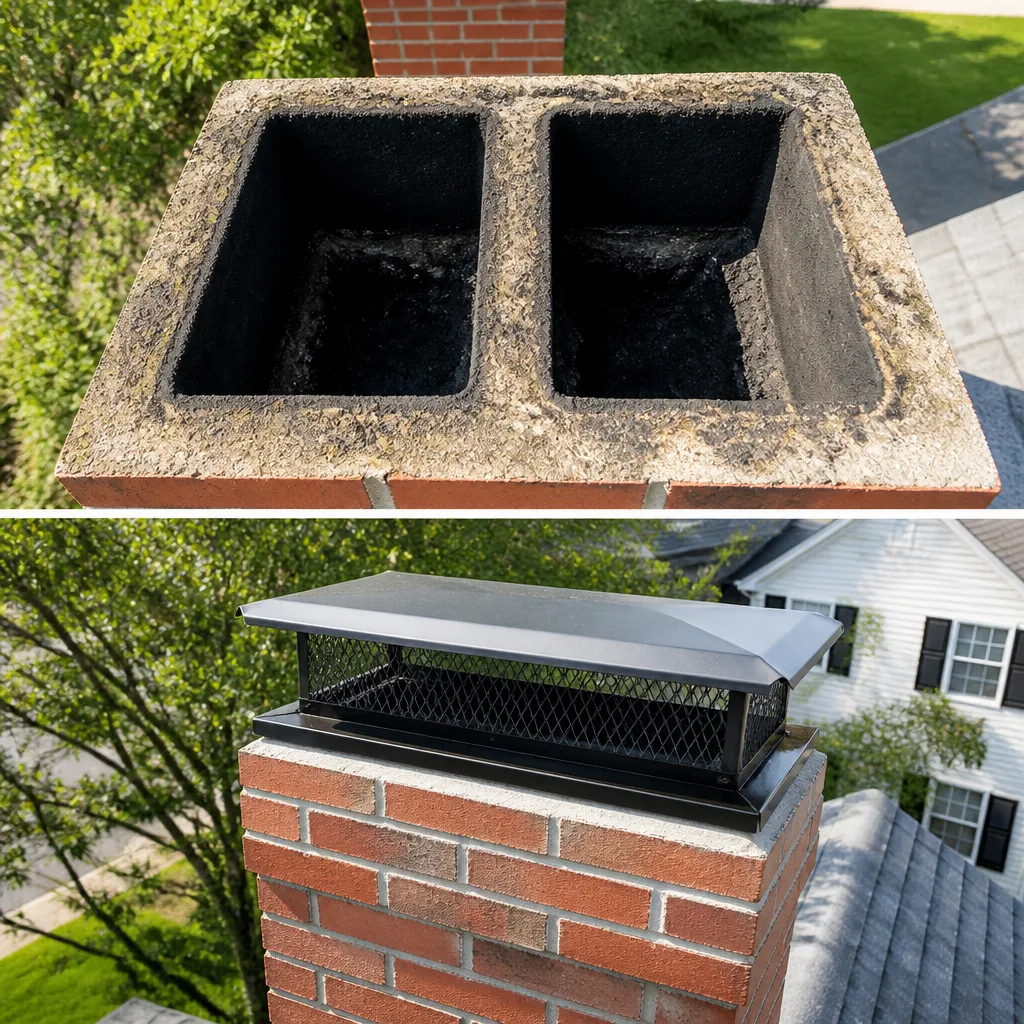
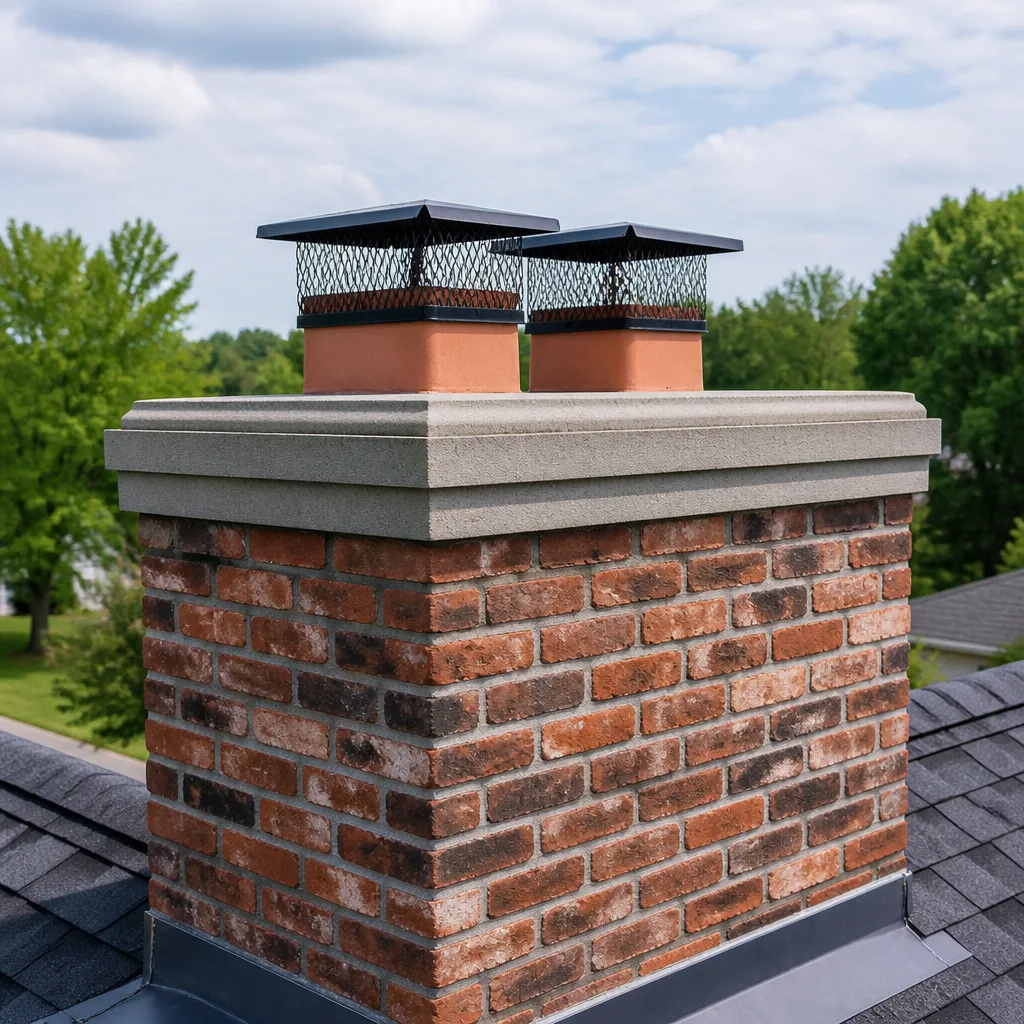
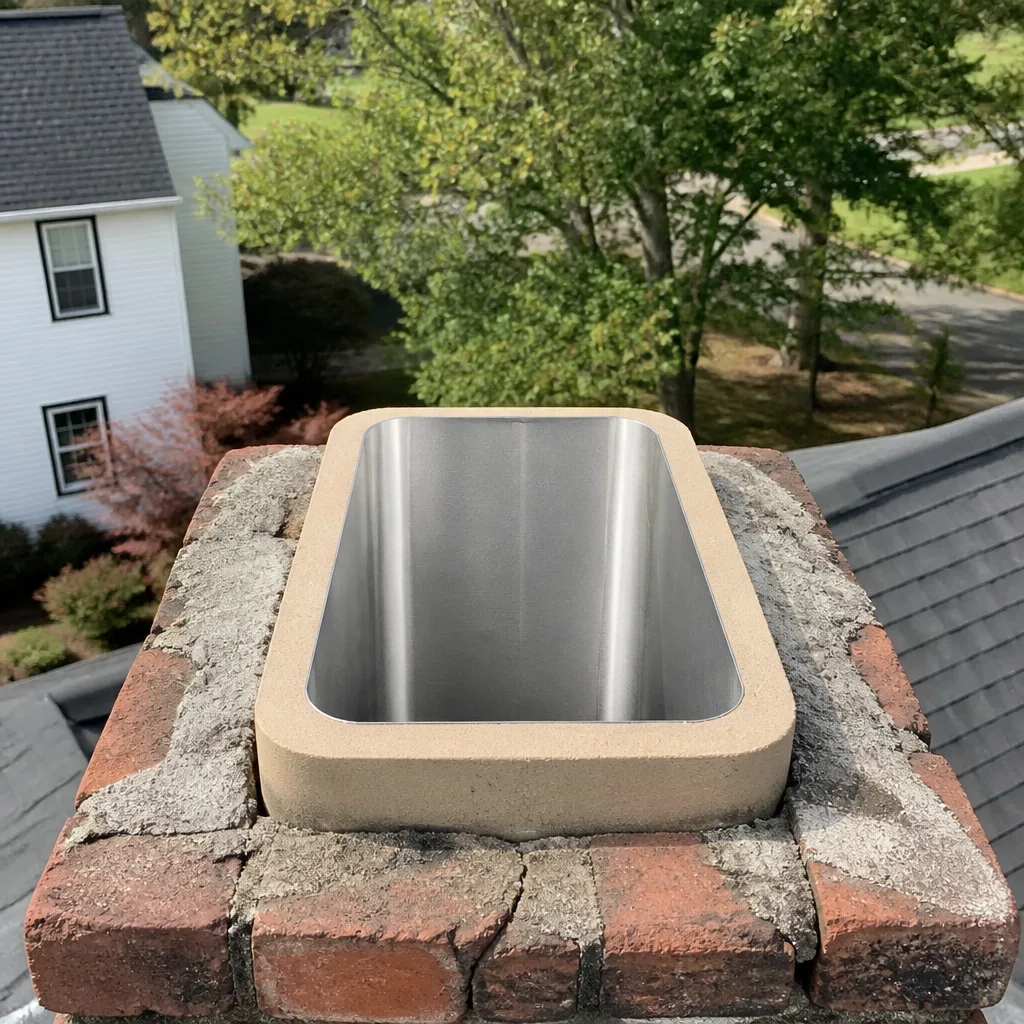
See the difference
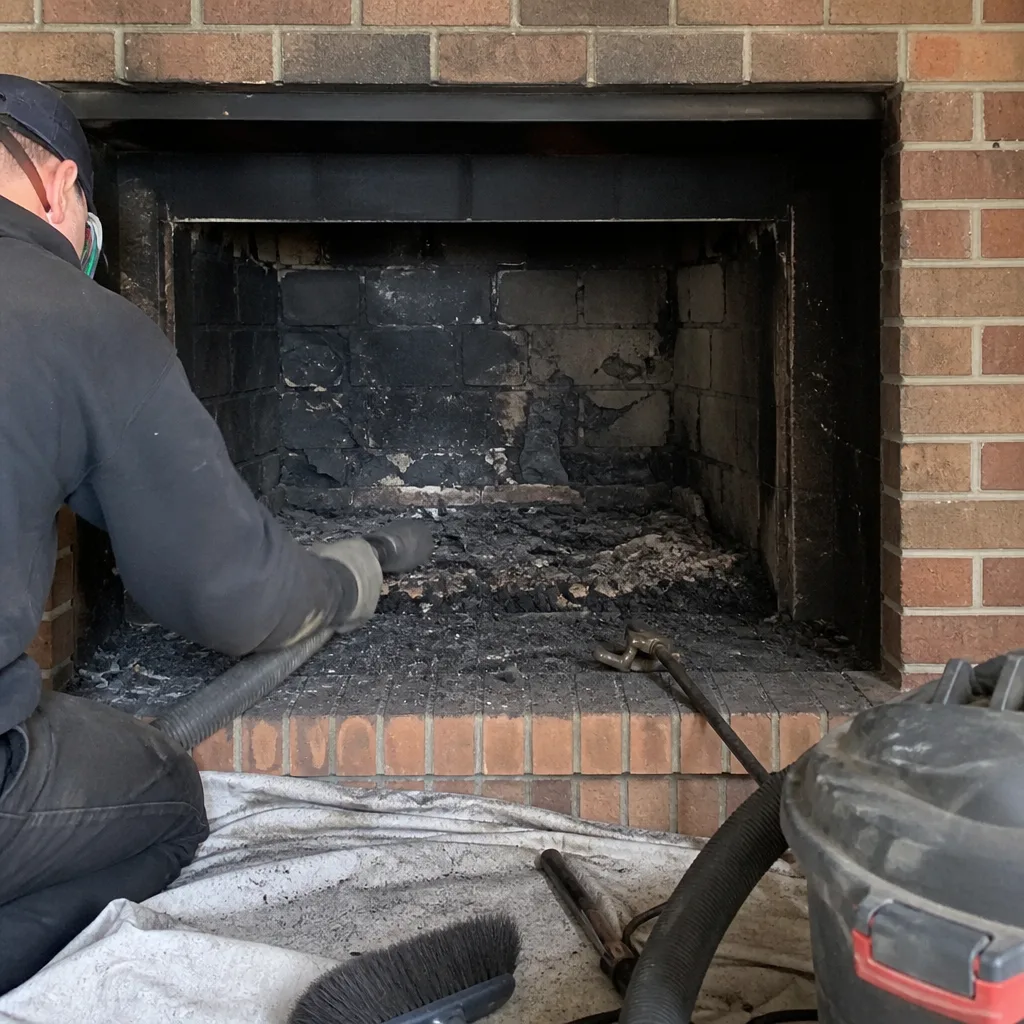 Before
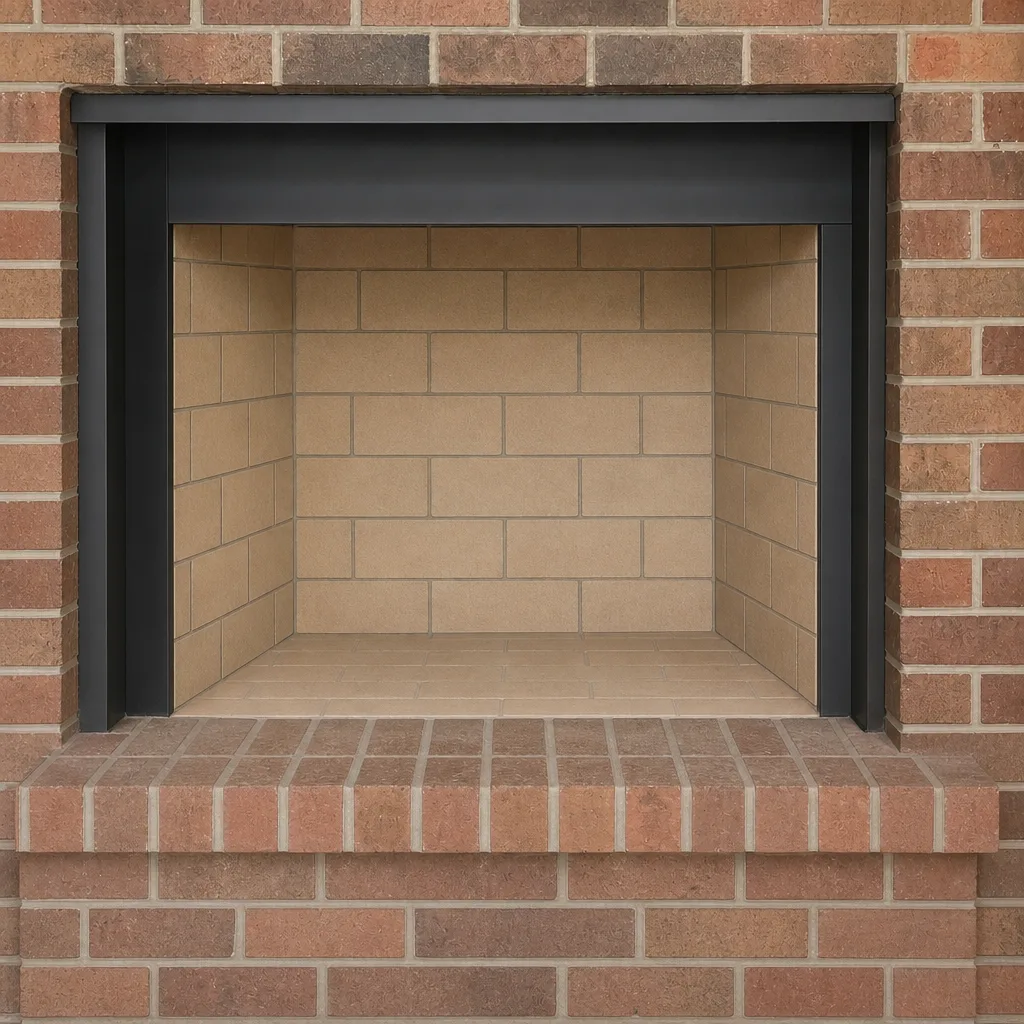 After
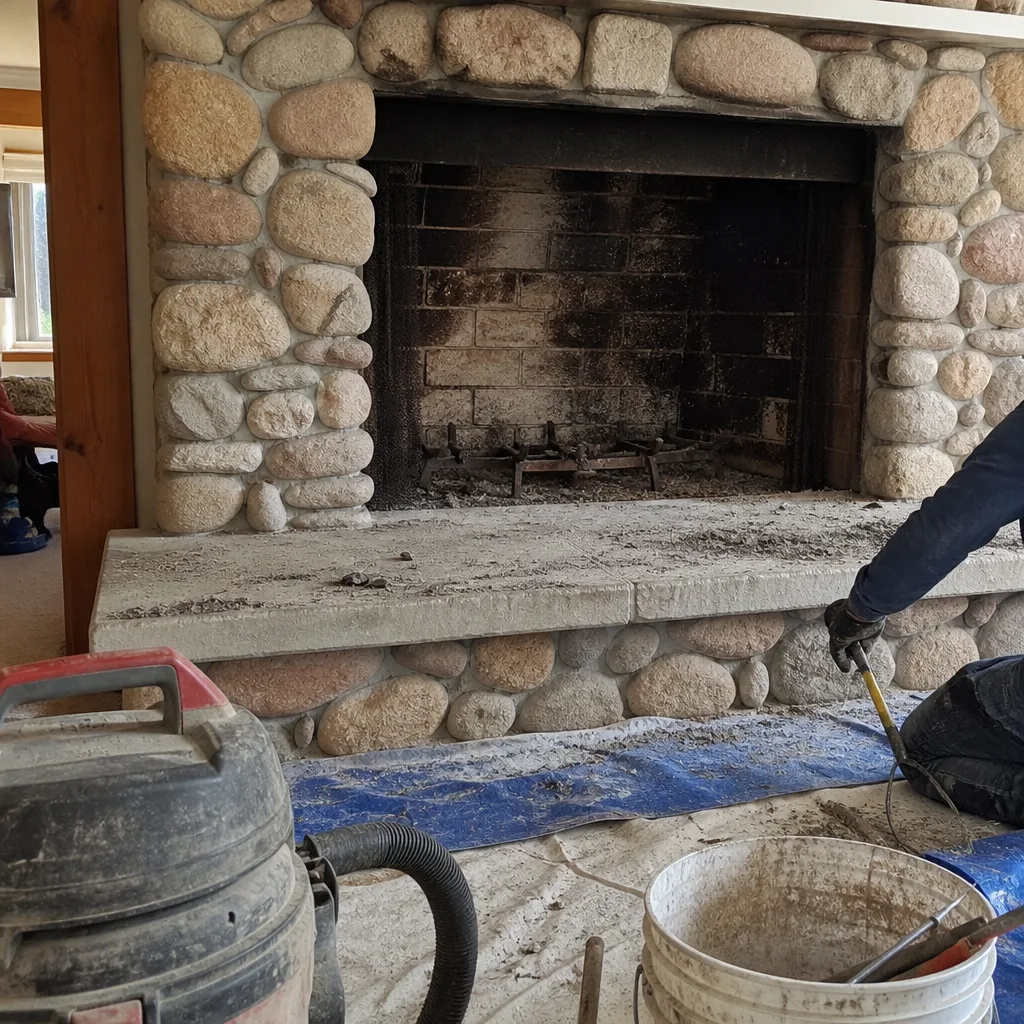 Before
 After
 Before
 After
When to Call a Professional
Some jobs are genuinely a professional’s work, and chimney is one of them. Call today if you’ve seen smoke roll into the room during a fire, if you smell glazed creosote, if you hear animals in the flue, if your cap has moved after a wind event, or if your CO alarm has gone off in a home with a fireplace or wood stove. These aren’t warning signs to monitor; they’re signs to act on. Call within a month or two if you’ve seen persistent off-season smoky smells, lazy flame behavior, rust streaks, mortar dusting, efflorescence, or visible crown cracks. And any structural repair that involves rebuilding the crown, resurfacing the flue, or replacing a liner should be in a professional’s hands, with a written scope and a camera photo set you can keep.
Kent Chimney Sweep offers free estimates in Kent. Call (855) 658-3498. We answer 24/7. Fast dispatch from 7am to 7pm, Sunday through Friday. We’ll check the smell, walk the outside, run a camera down the flue, and tell you what we found before we tell you what it costs.
Frequently Asked Questions
Once a year is the standard for a fireplace that gets regular use, and in our wetter climate it’s worth treating as a before-the-season task rather than an afterthought. If you burn more than a cord of wood a season or you see the warning signs in this guide, get an inspection sooner. For a home that’s used a fireplace for several seasons without a sweep, an inspection before the next fire is the right starting point.
No. A smoky smell from an unused chimney is one of the clearest signs the flue is holding residue and not venting cleanly, and in Kent it usually points to a creosote build-up that’s ready to be cleaned. Book a sweep before you light the next fire. If the smell is acrid or glazed rather than woody, treat it as a call-today sign.
No, that’s masking the symptom, not the cause. A cracked window can add enough draft to clear the smoke you can see, but the underlying flue issue is still there, and the next burn is a coin flip. Smoke rollout means the flue is blocked, undersized, or failing, and a professional inspection is the only reliable way to sort out which.
It’s efflorescence, which means water is passing through the masonry and drying on the surface. It’s a sign that the brick or mortar is wet and needs attention, and in Kent’s wet season it’s the kind of thing that gets worse over a couple of years rather than fixing itself. A five-minute exterior walk and a professional inspection of the crown and cap will tell you where the water’s getting in.
A sweep cleans the flue, and an inspection evaluates the whole system, including the crown, cap, firebox, and exterior masonry. You can have a clean flue with a failing crown or a cracked firebox, which is why the two are often booked together. If you’ve had a sweep but no proper inspection in a while, ask for both.
The creosote in the flue keeps building, and once it reaches the glazed stage it’s the deposit most associated with chimney fires, because it’s volatile and hard to remove with a standard sweep. Alongside the fire risk, moisture sneaks into cracks in the masonry, and the crown and firebox deteriorate faster than they would with a clean flue. A sweep every season is the cheap end of chimney maintenance; the skips are where the expensive repairs come from.
No, and that’s a reason to check the firewood first. Damp wood produces smokier, cooler burns that make a fire sluggish, and in Kent’s wet shoulder seasons, firewood that wasn’t properly seasoned is a common culprit. If the fire still struggles with dry, well-seasoned wood, treat the flue as the issue and book a sweep and inspection.
The Bottom Line
Chimney warning signs split into what you smell, how the fire behaves, and what you can see in the firebox and on the outside walls. The smell index is the most useful of the three, because creosote, animal intrusion, moisture, and backdraft each have a distinctive signature once you know what to listen for. Rust streaks, spalling firebrick, and mortar dusting in the firebox point to liner or moisture trouble; lazy flames, slow draft recovery, and smoke rollout point to draft problems; efflorescence, crown cracks, and cap displacement point to water trouble on the outside. The triage hierarchy separates the call-today signs from the ones you can schedule a sweep for, and a proper camera inspection is what turns any of them into a plan. A swept chimney is a starting point, not a finish line.
If any of these signs sound familiar, it’s worth having the whole system looked at rather than guessing from the outside. Call Kent Chimney Sweep at (855) 658-3498 for a free estimate. We answer 24/7. Fast dispatch from 7am to 7pm, Sunday through Friday. We’ll tell you what we found before we tell you what it costs.
Written by the team at Kent Chimney Sweep.